



posted 8th September 2025
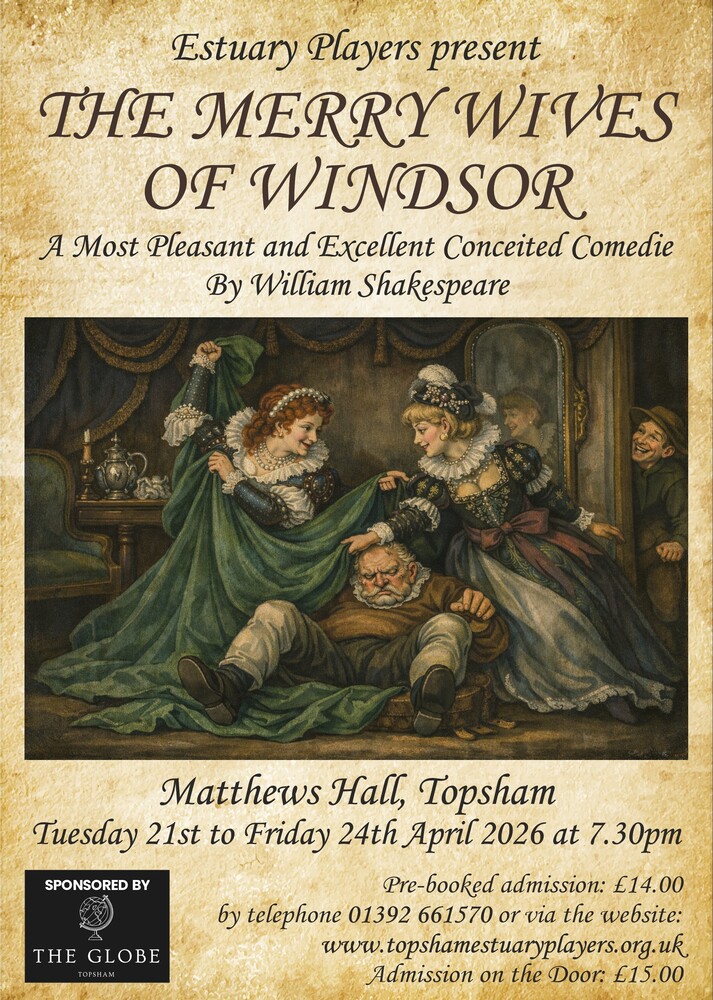
The image of Falstaff in the laundry basket is inspired by an 18th Century painting by Heinrich Fussli.
Shakespeare in the Spring
The Merry Wives of Windsor
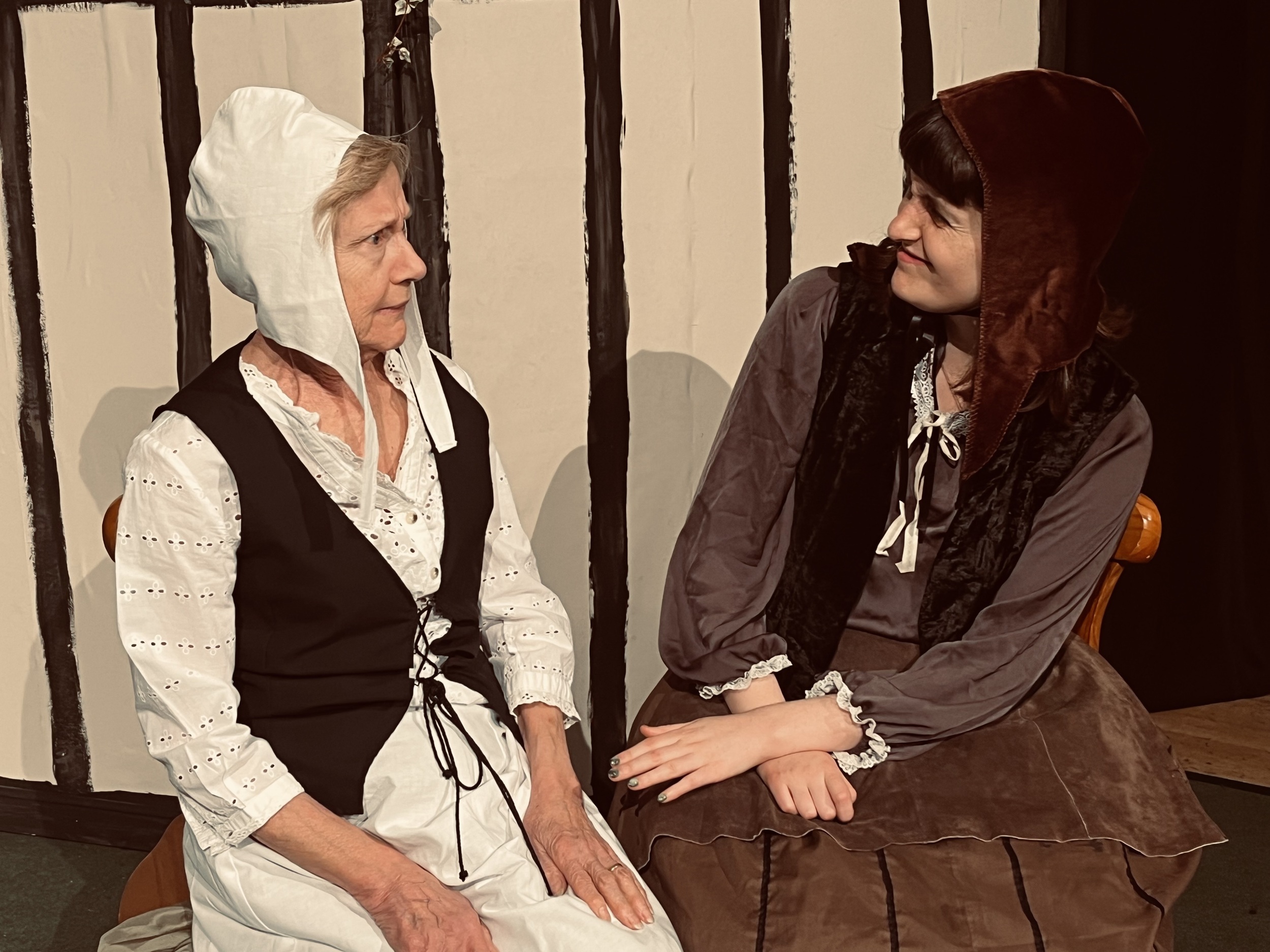
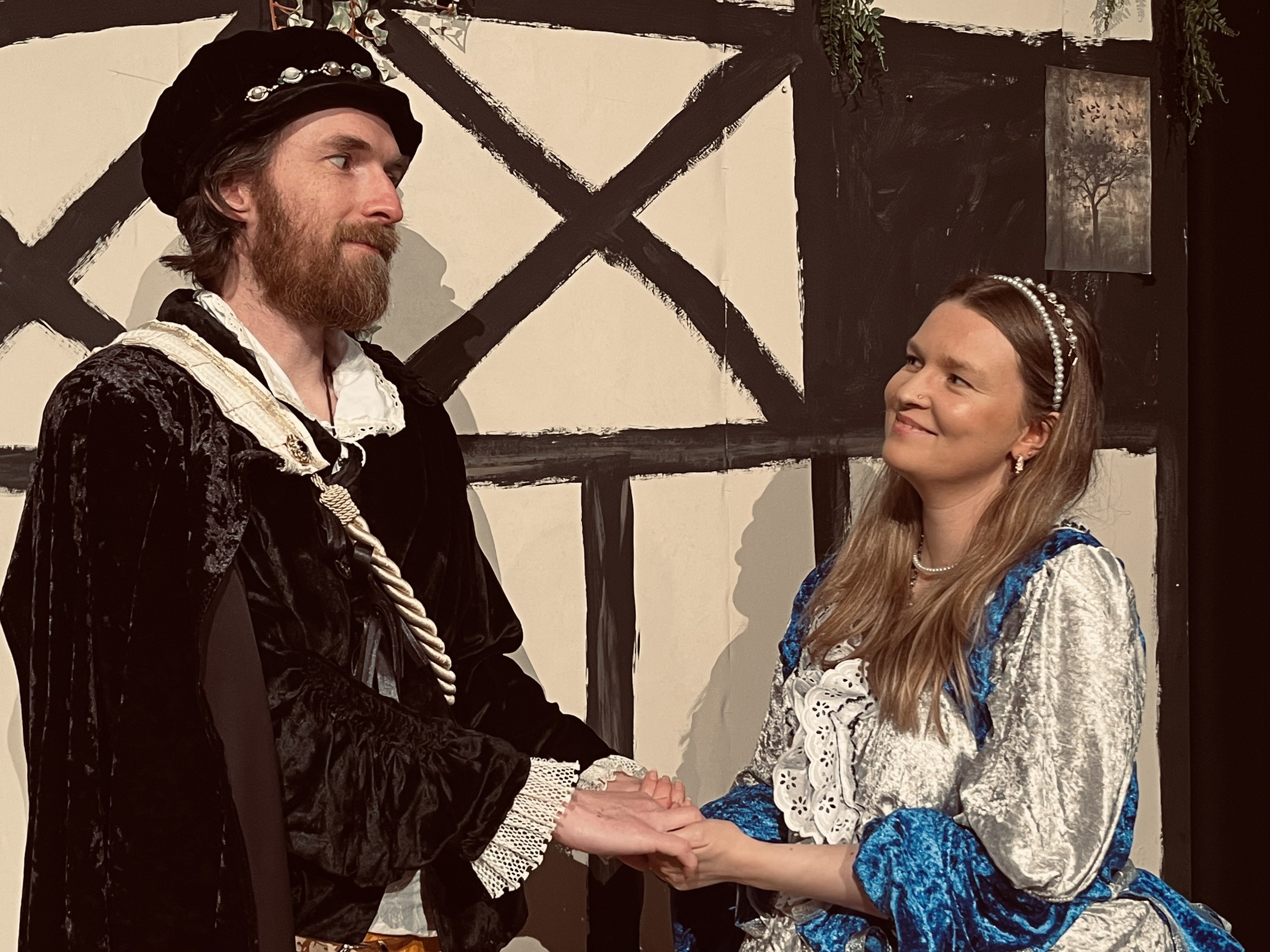
A great time was had by all in this light-hearted Shakespearean romp, under the watchful eye of Director Ian Potts.
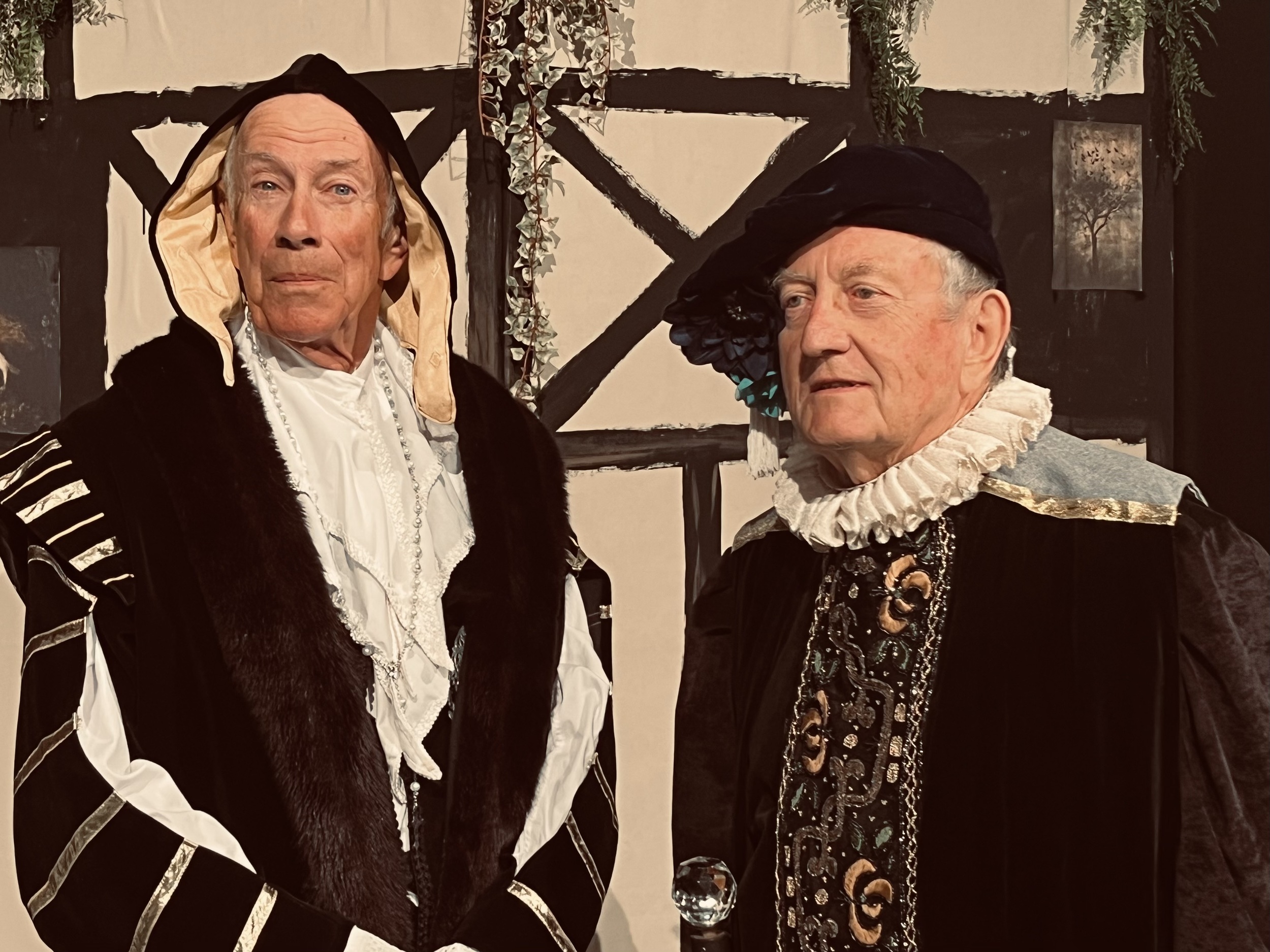
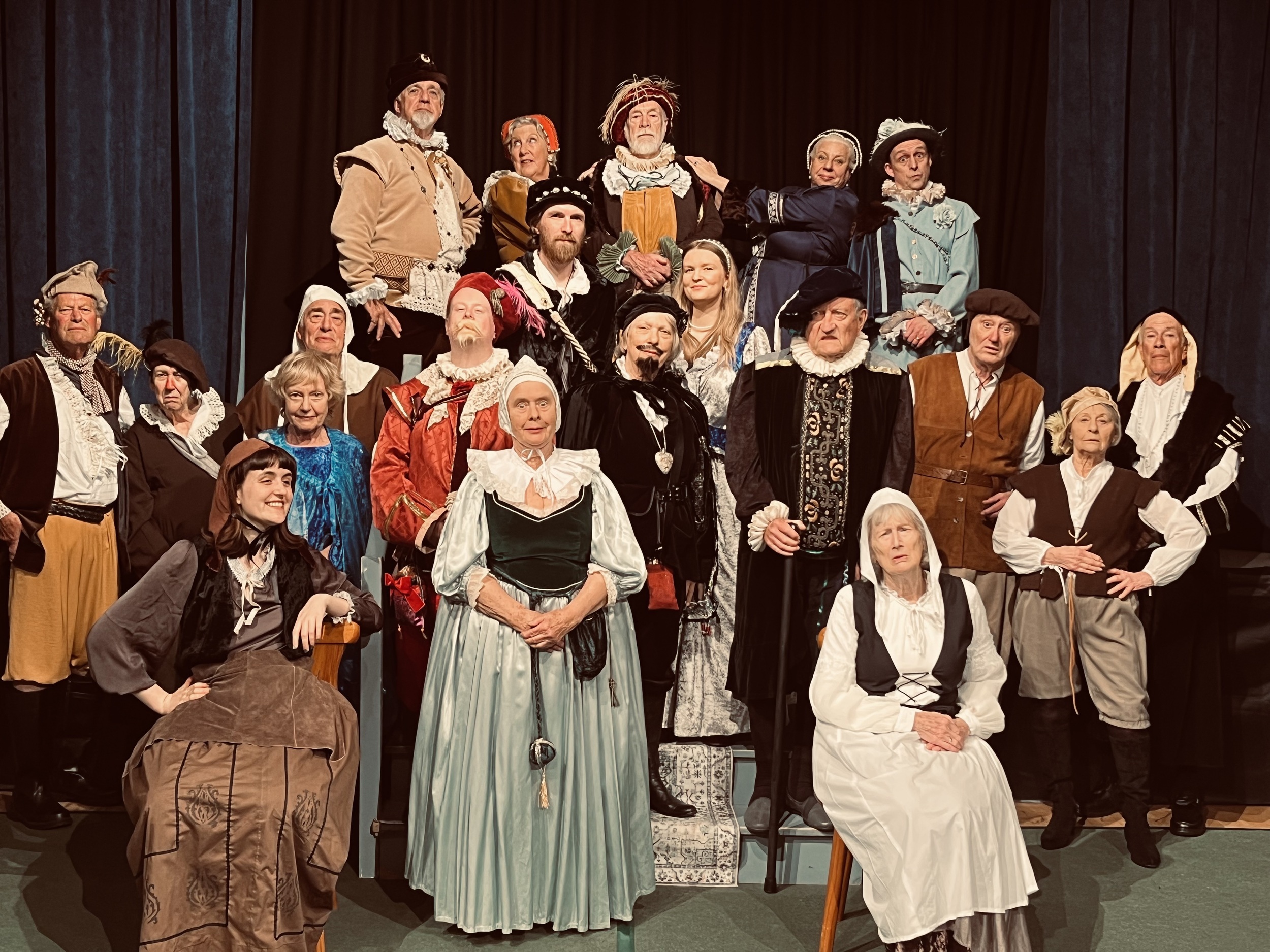
Whilst the play was performed in Elizabethan style costume, the humour and tales of the folk who live in the lively community of Windsor carried many themes familiar to a modern audience and remained entertaining and fresh.
Much humour is to be found in the plotting of Mistress Page and Mistress Ford to expose the lascivious doings of the lecherous Falstaff and teach him a lesson. Meanwhile the Pages’ daughter Anne has fallen for Fenton whose heart is true, but whose pockets are lacking. Each of Anne’s parents is promoting another suitor for her hand - the foppish Slender or Dr Caius. Can love conquer all in the end?
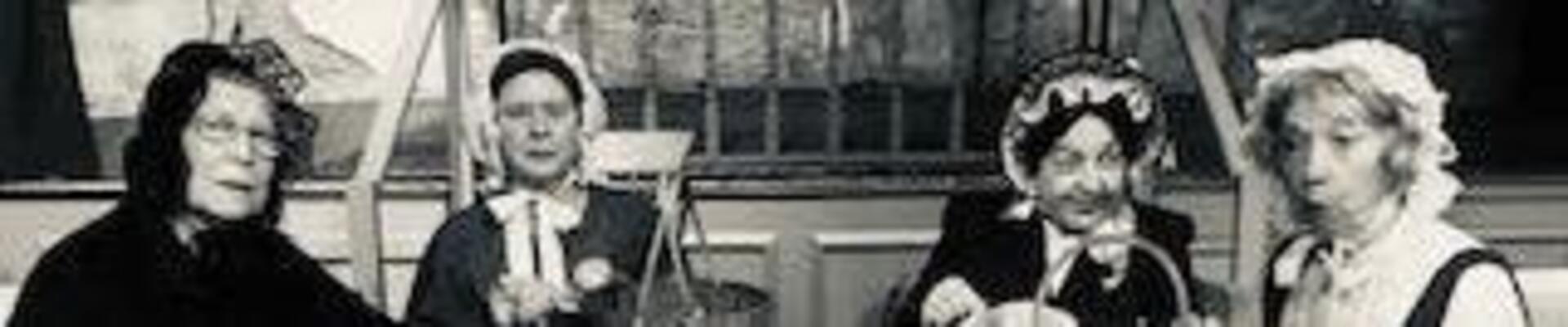
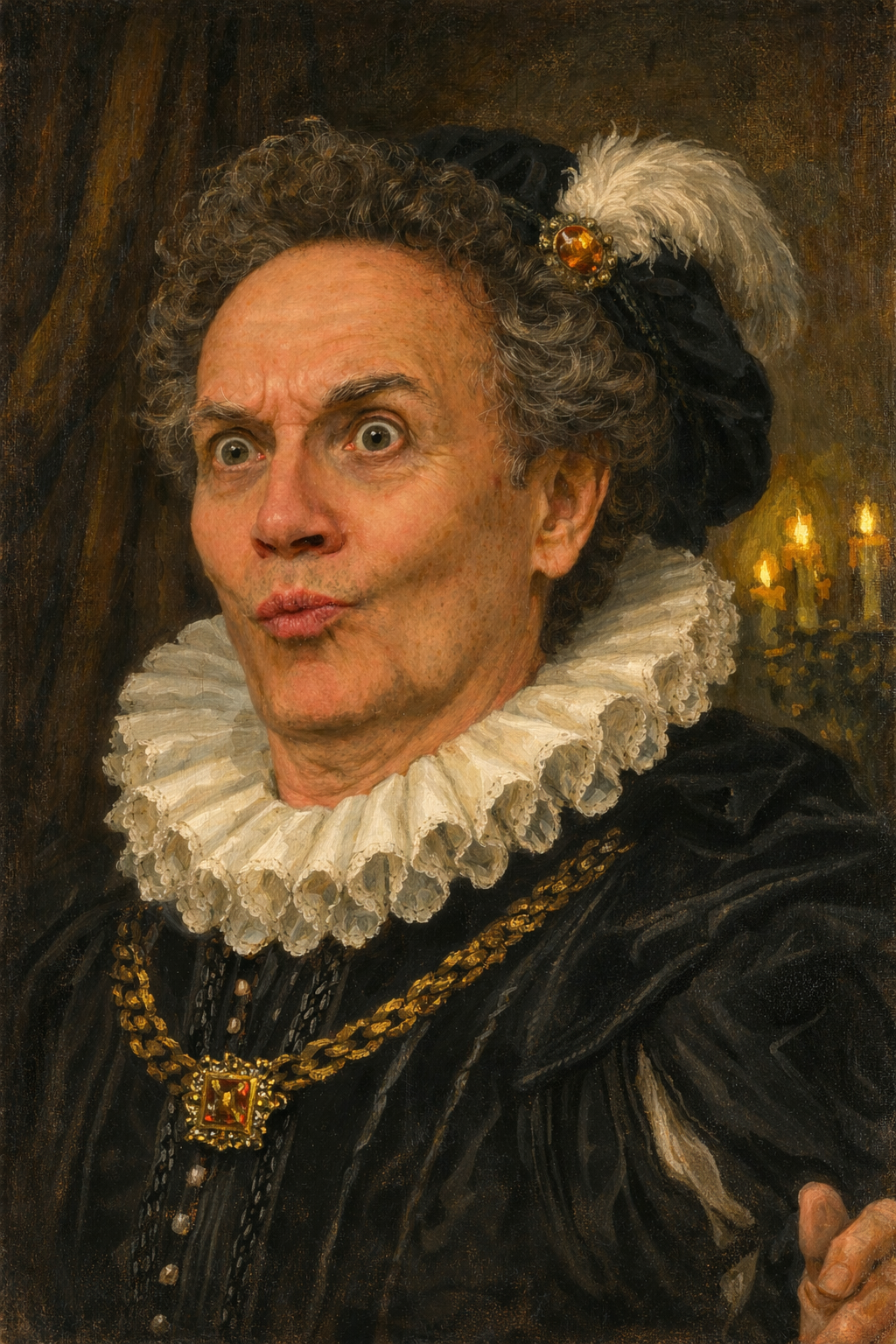
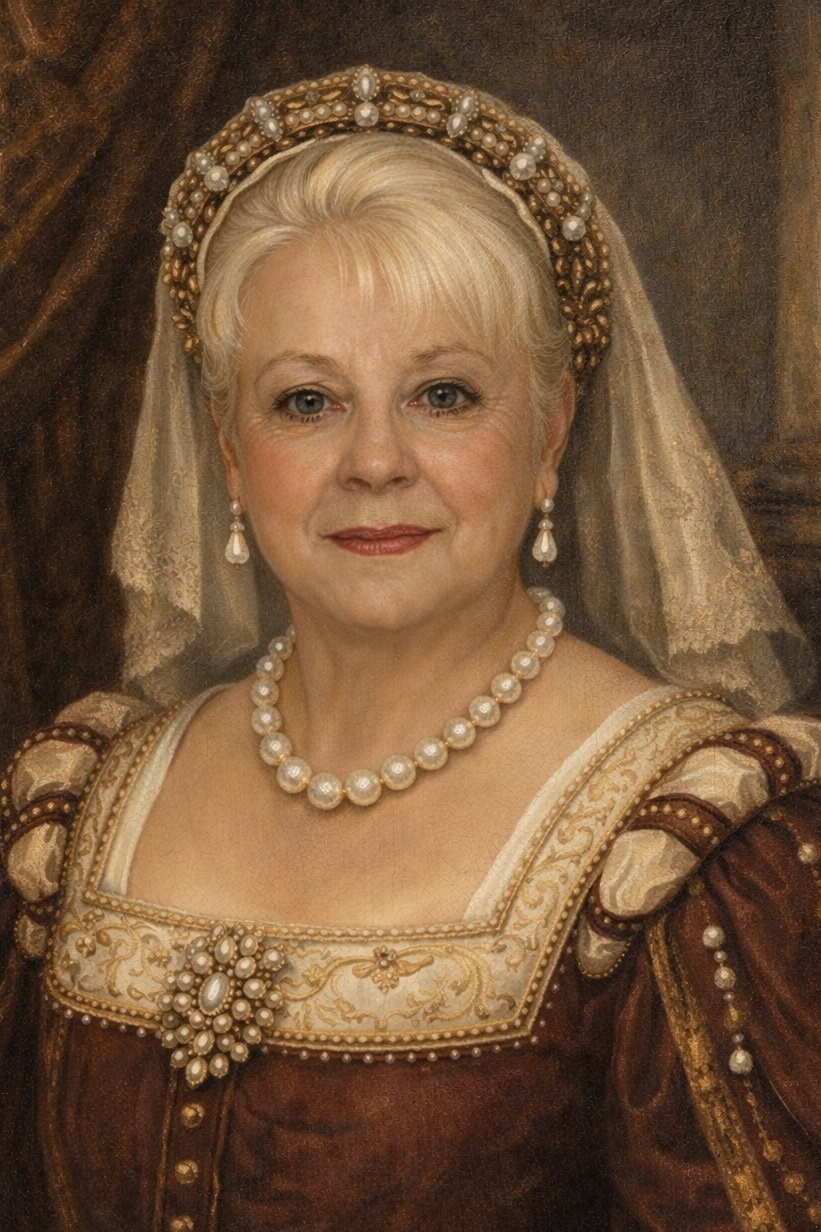
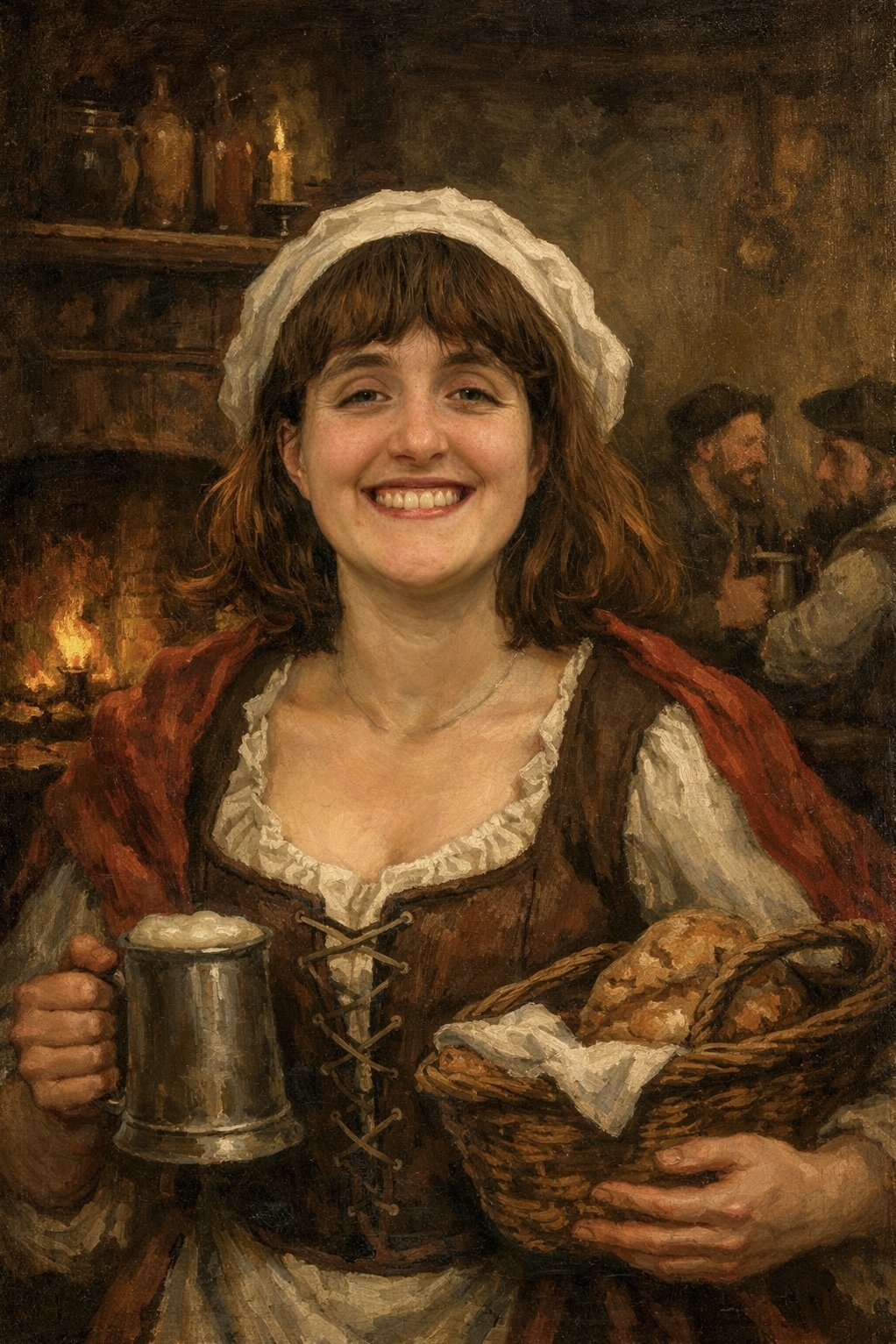
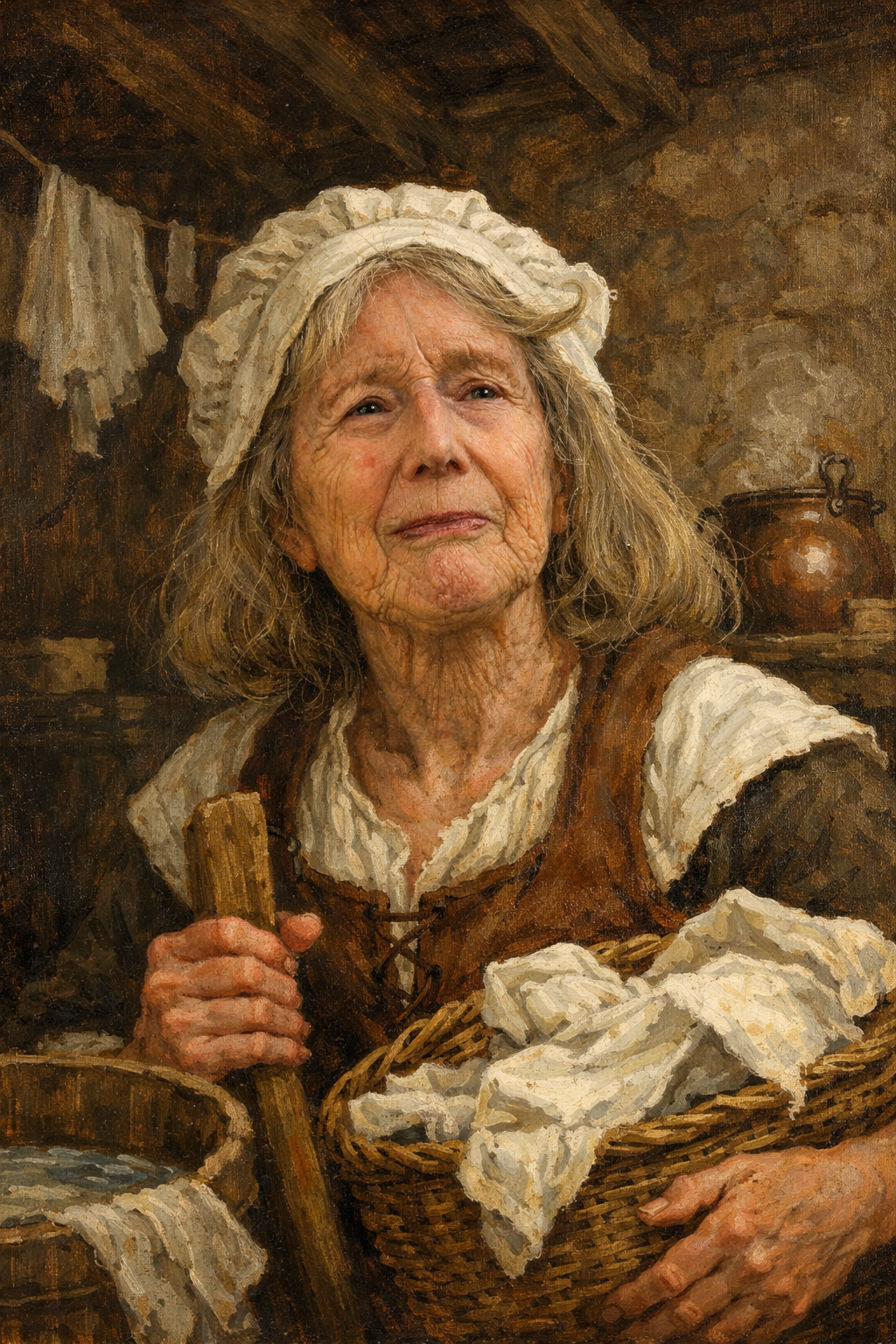
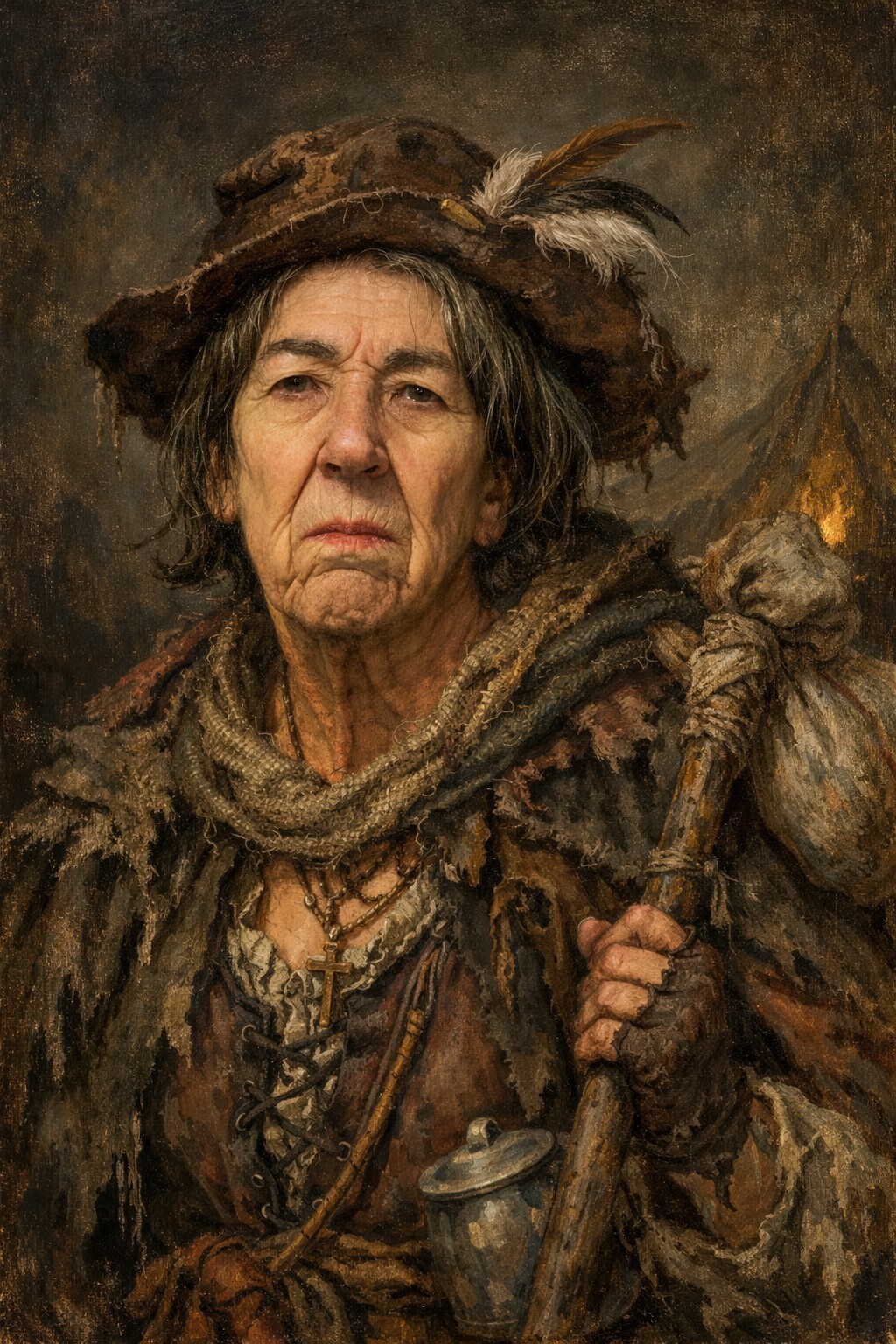
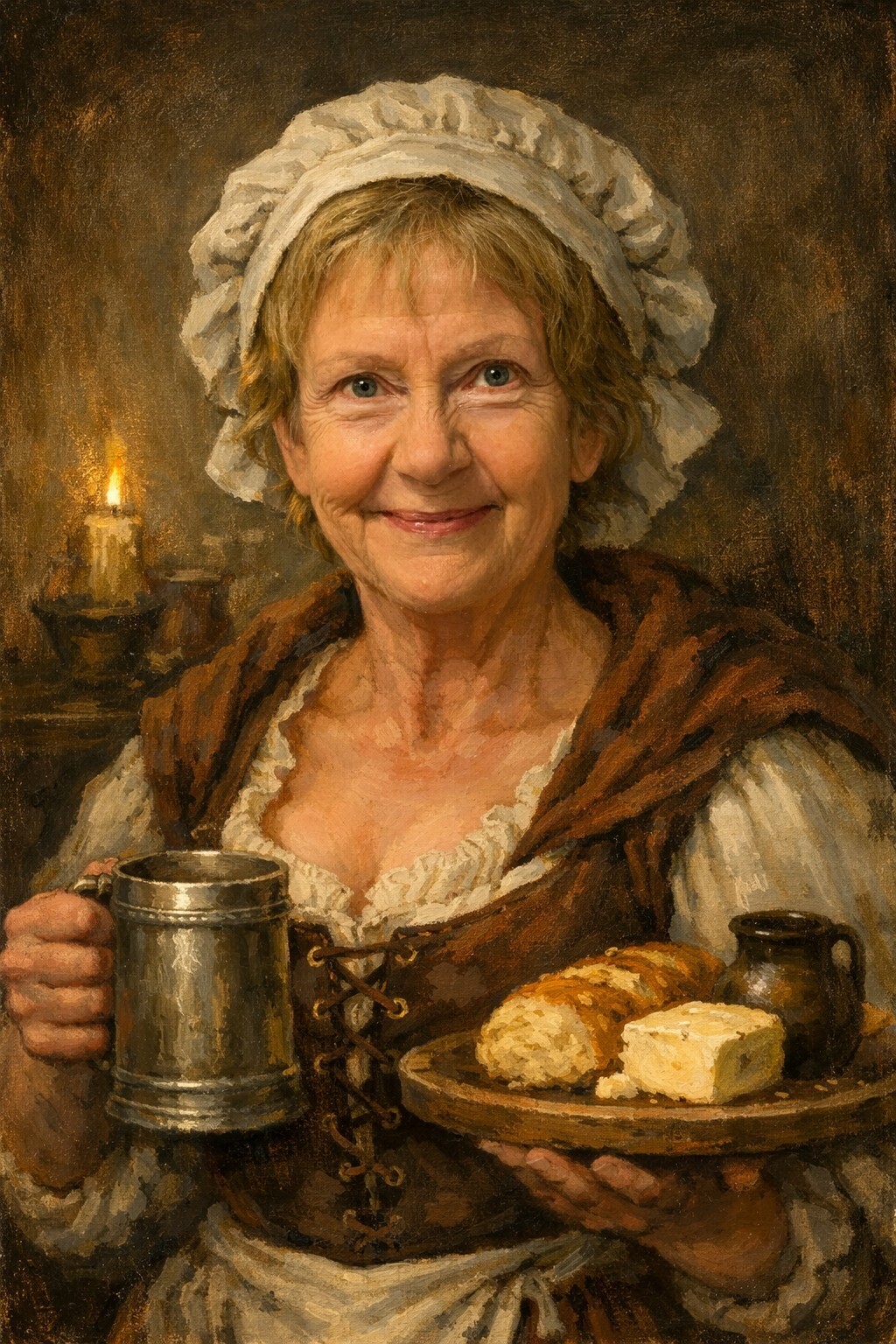
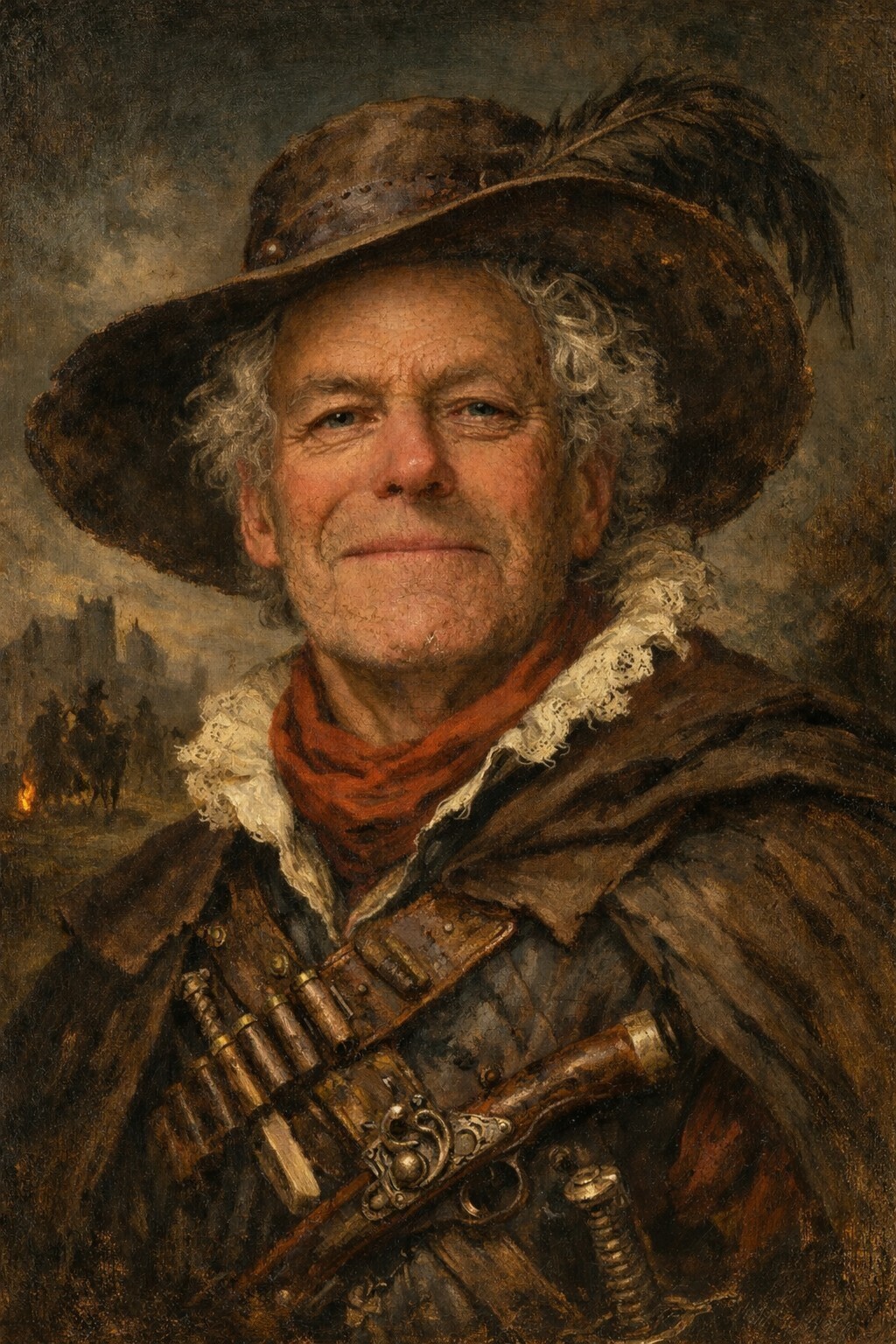
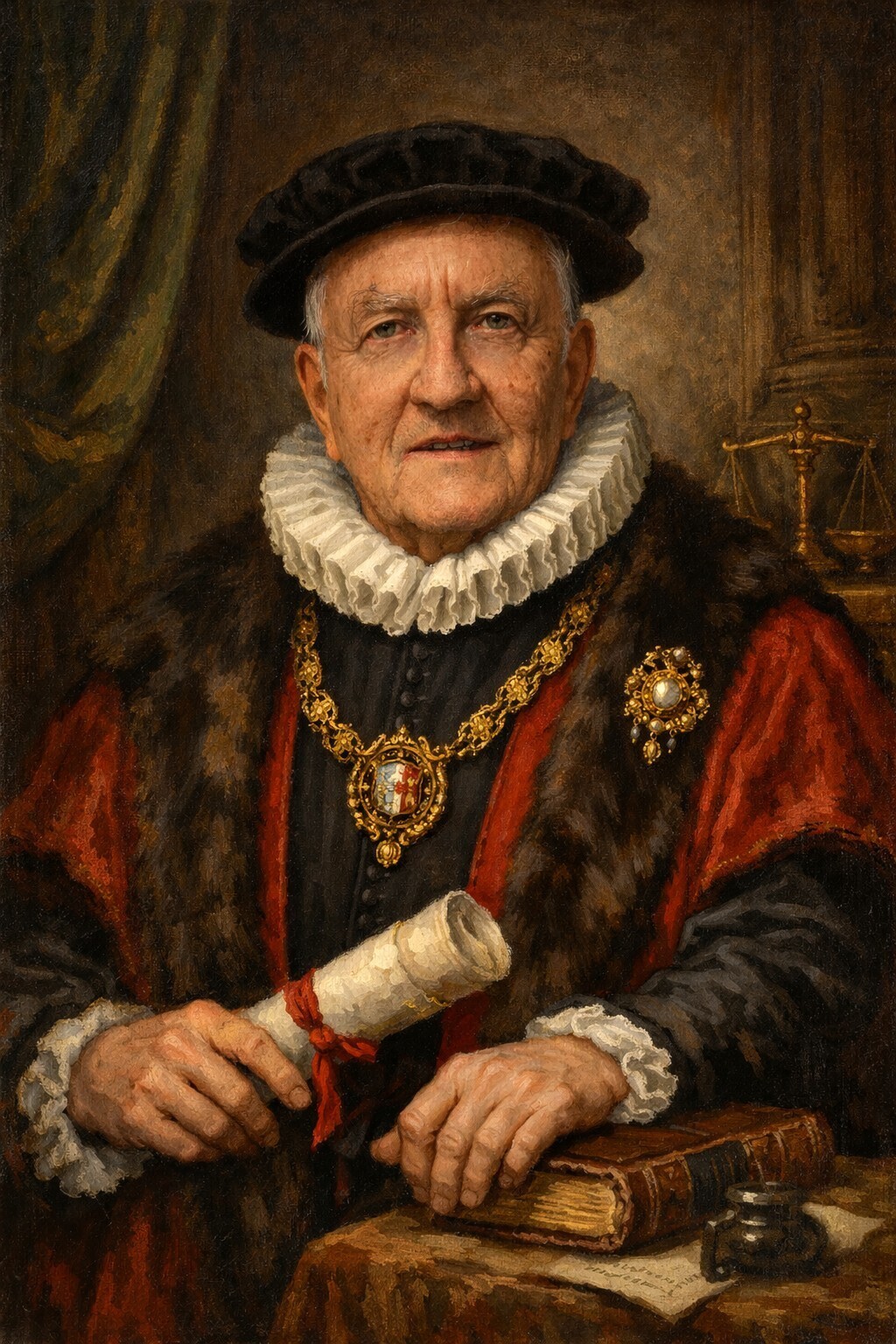
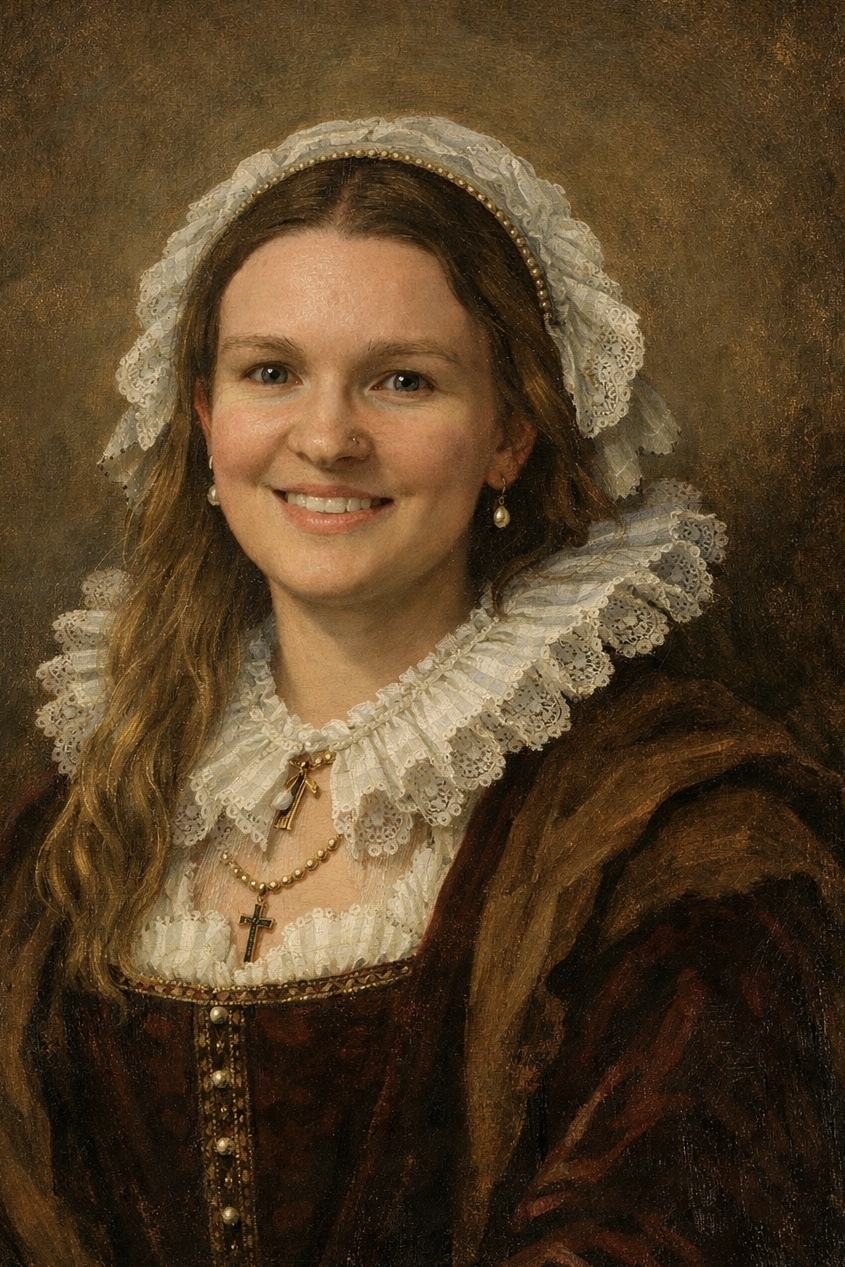
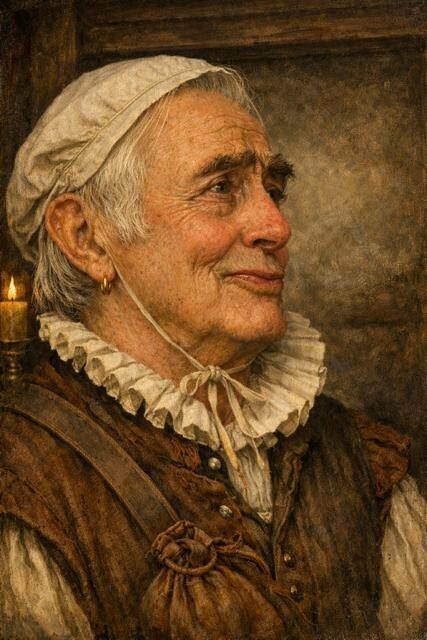
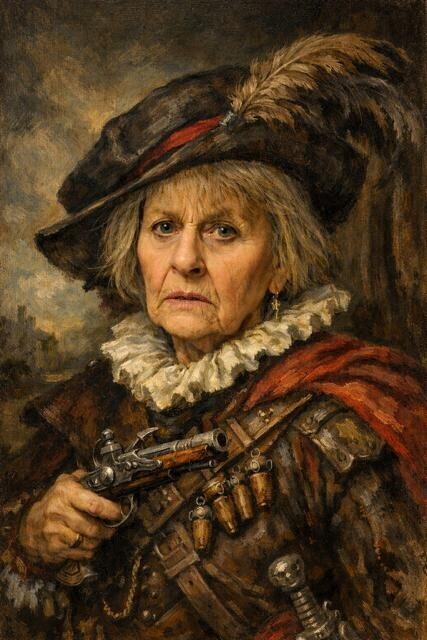
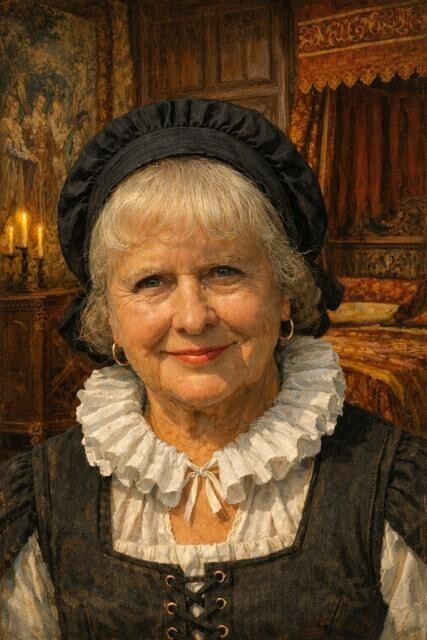
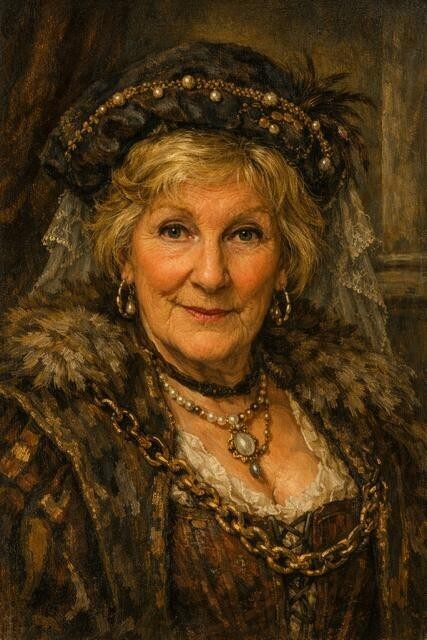
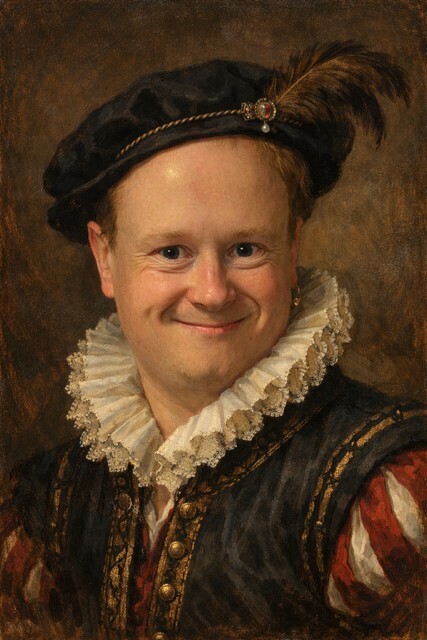
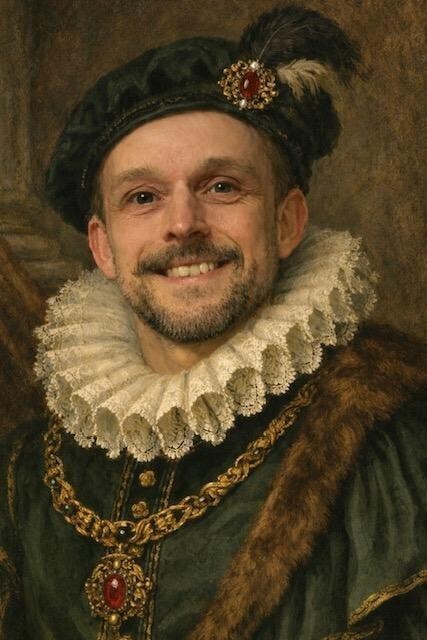
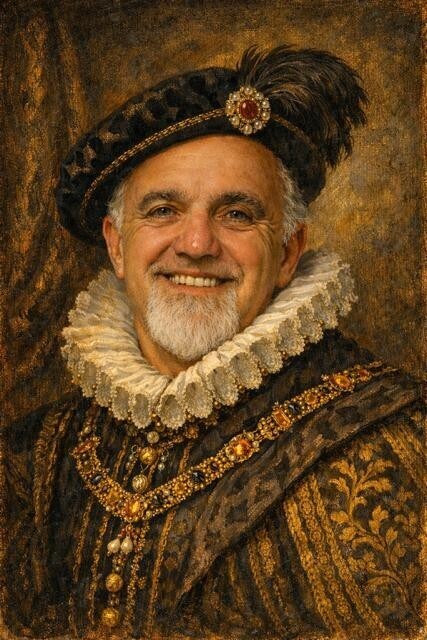
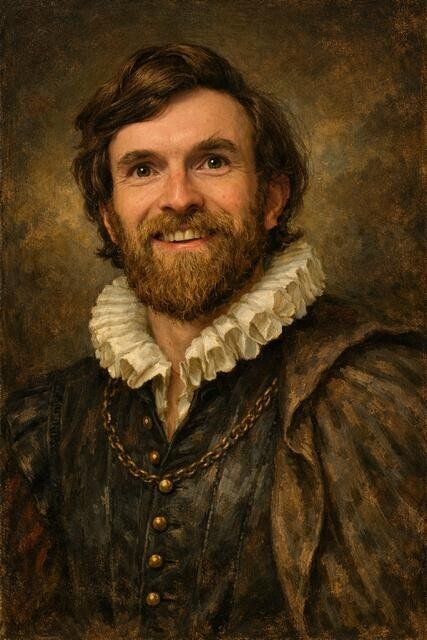
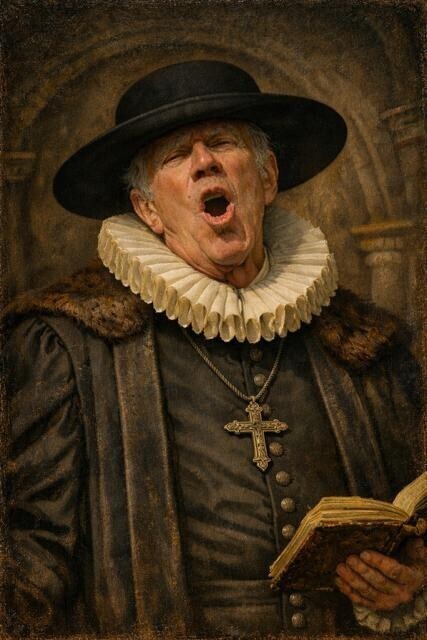
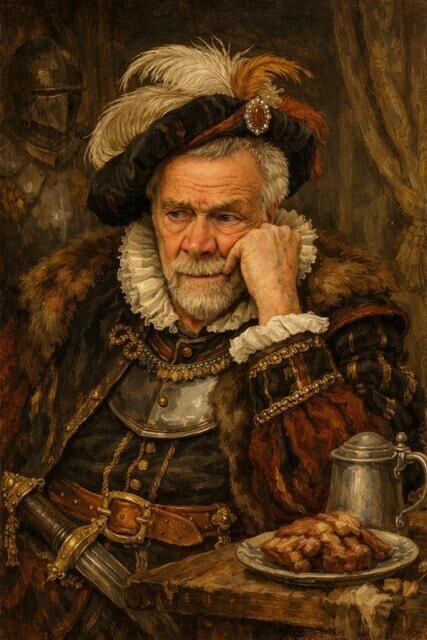
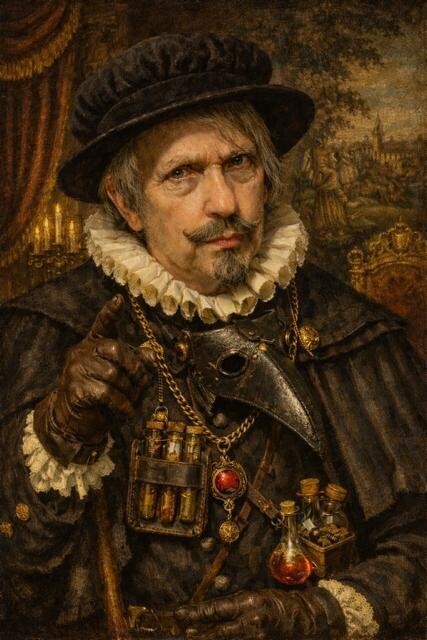
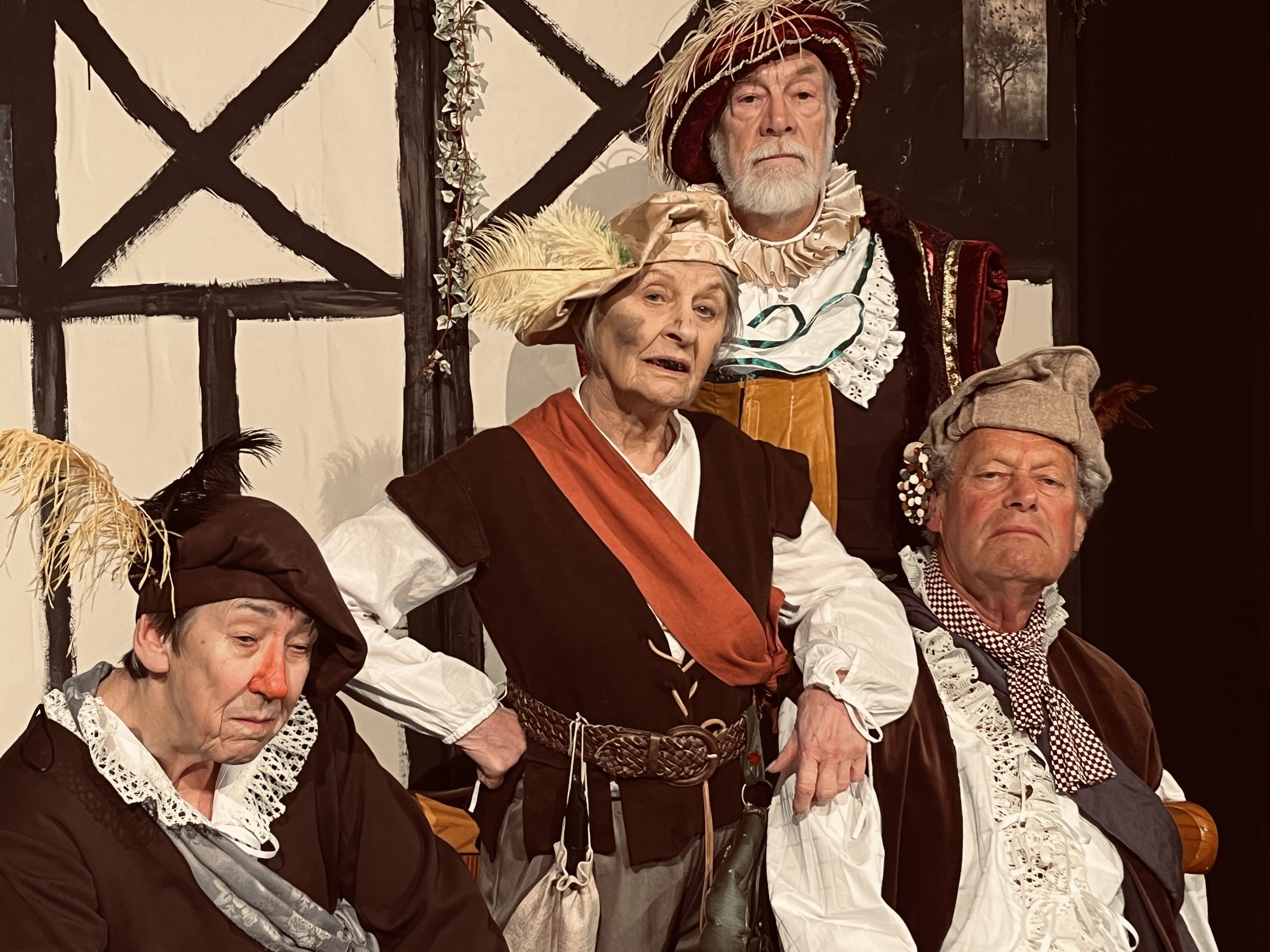
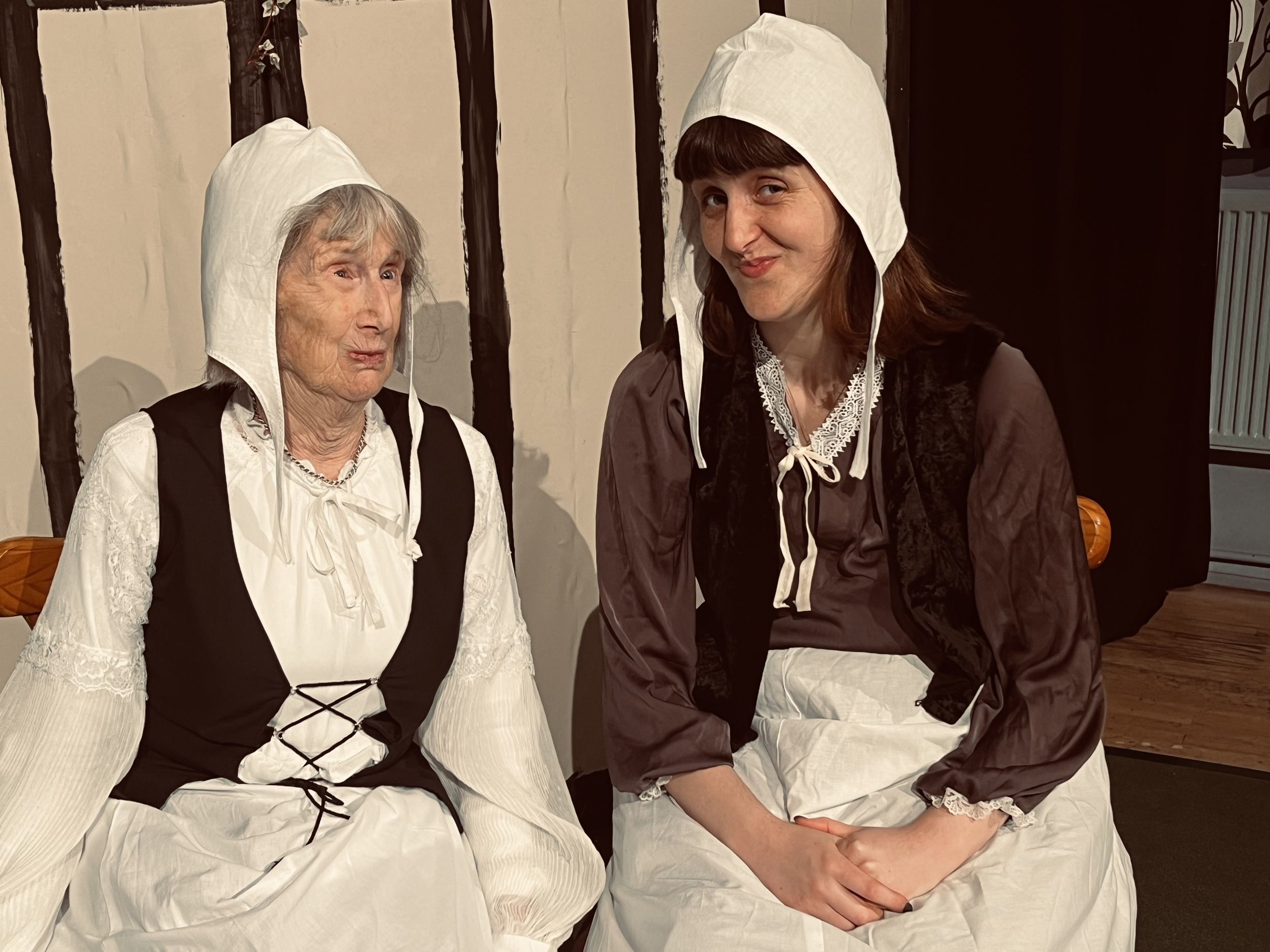
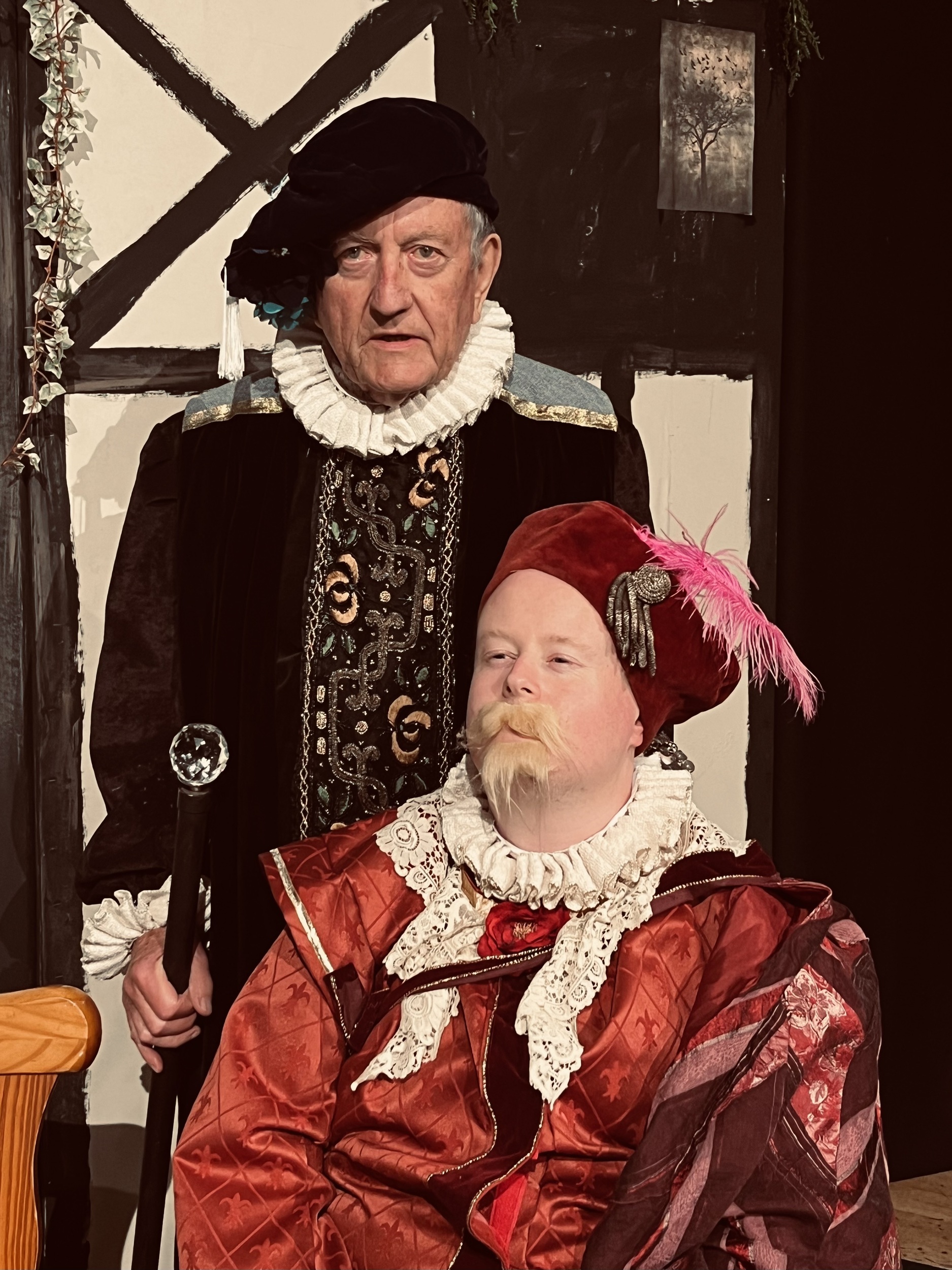
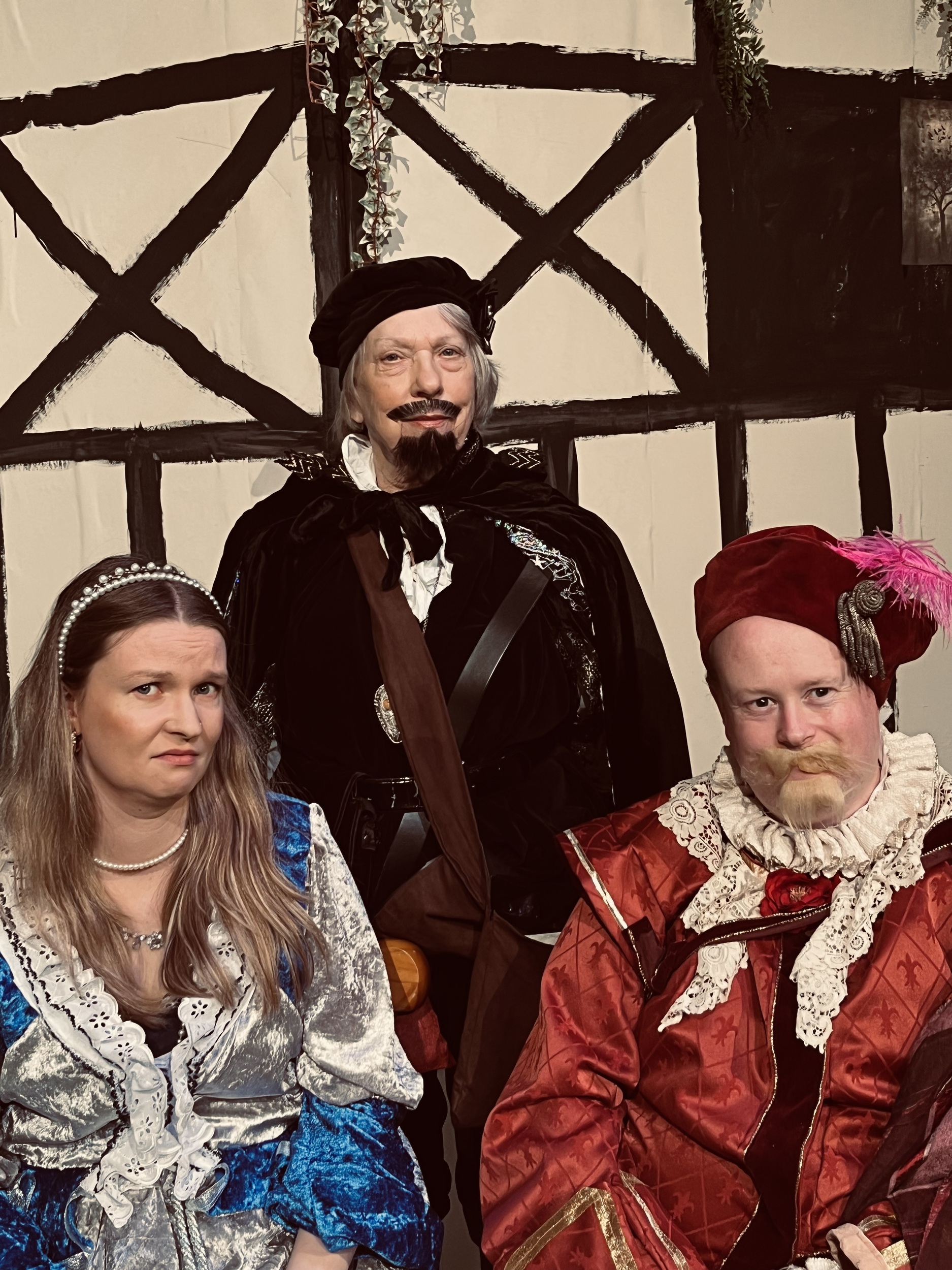
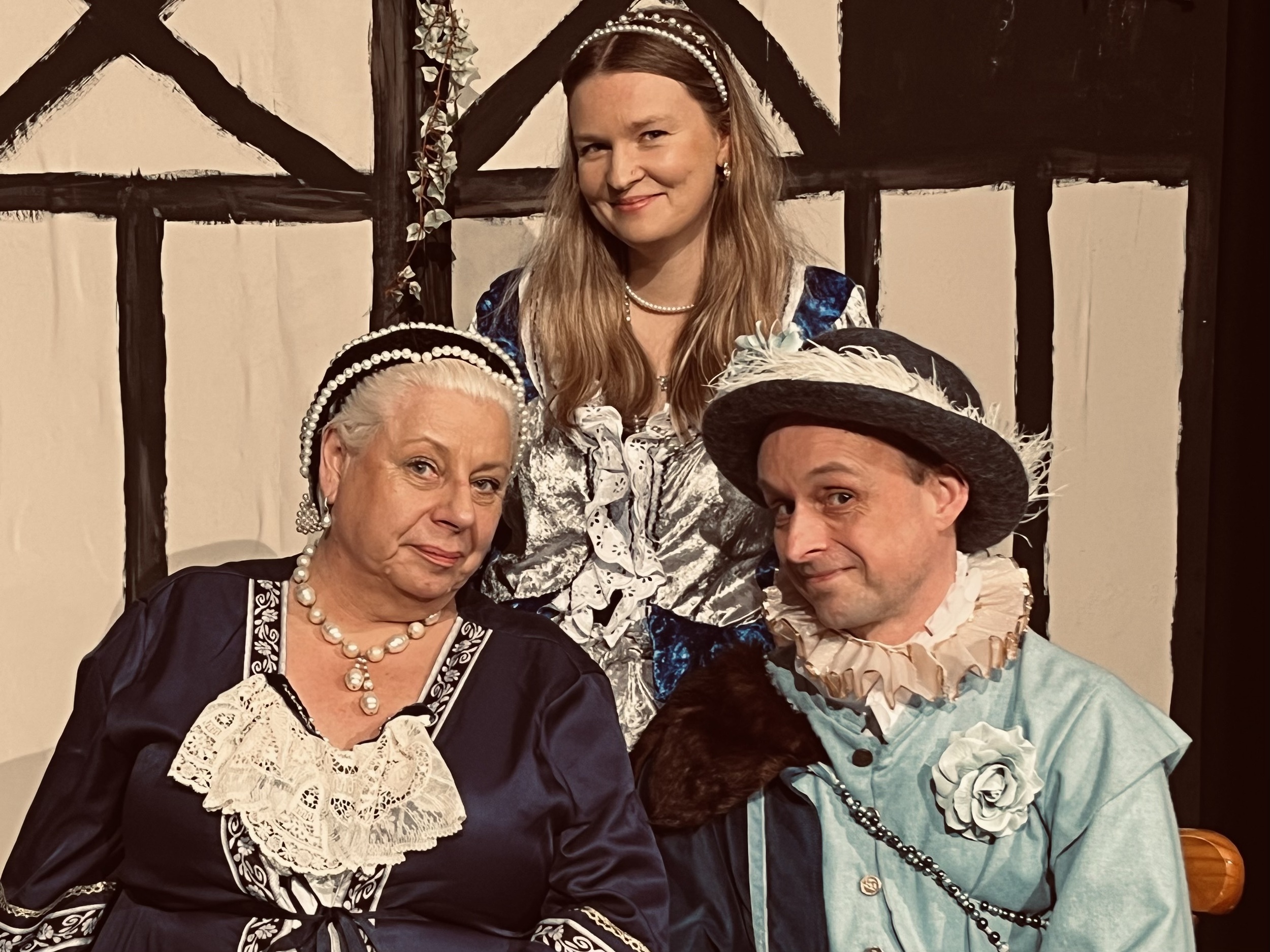
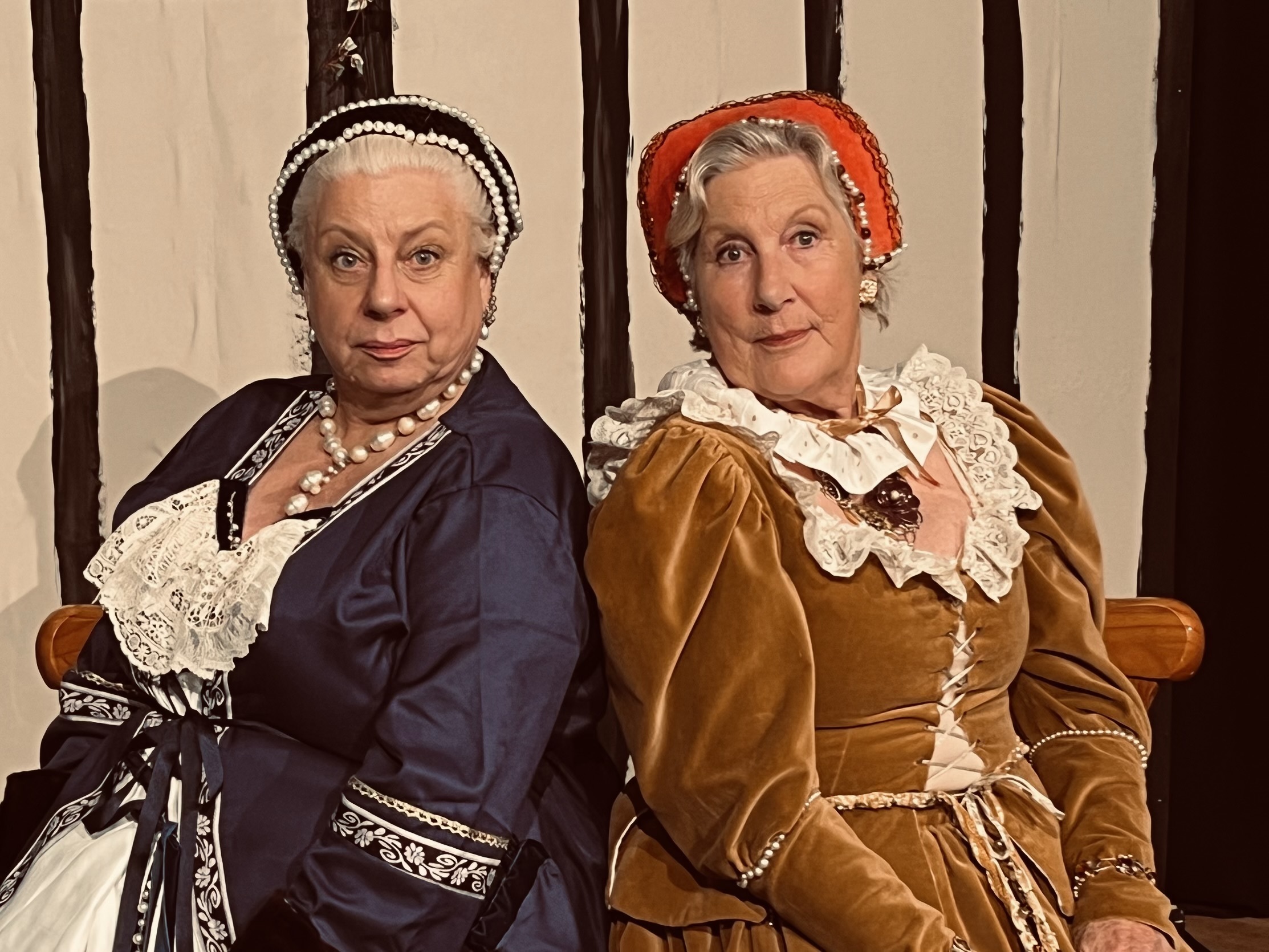
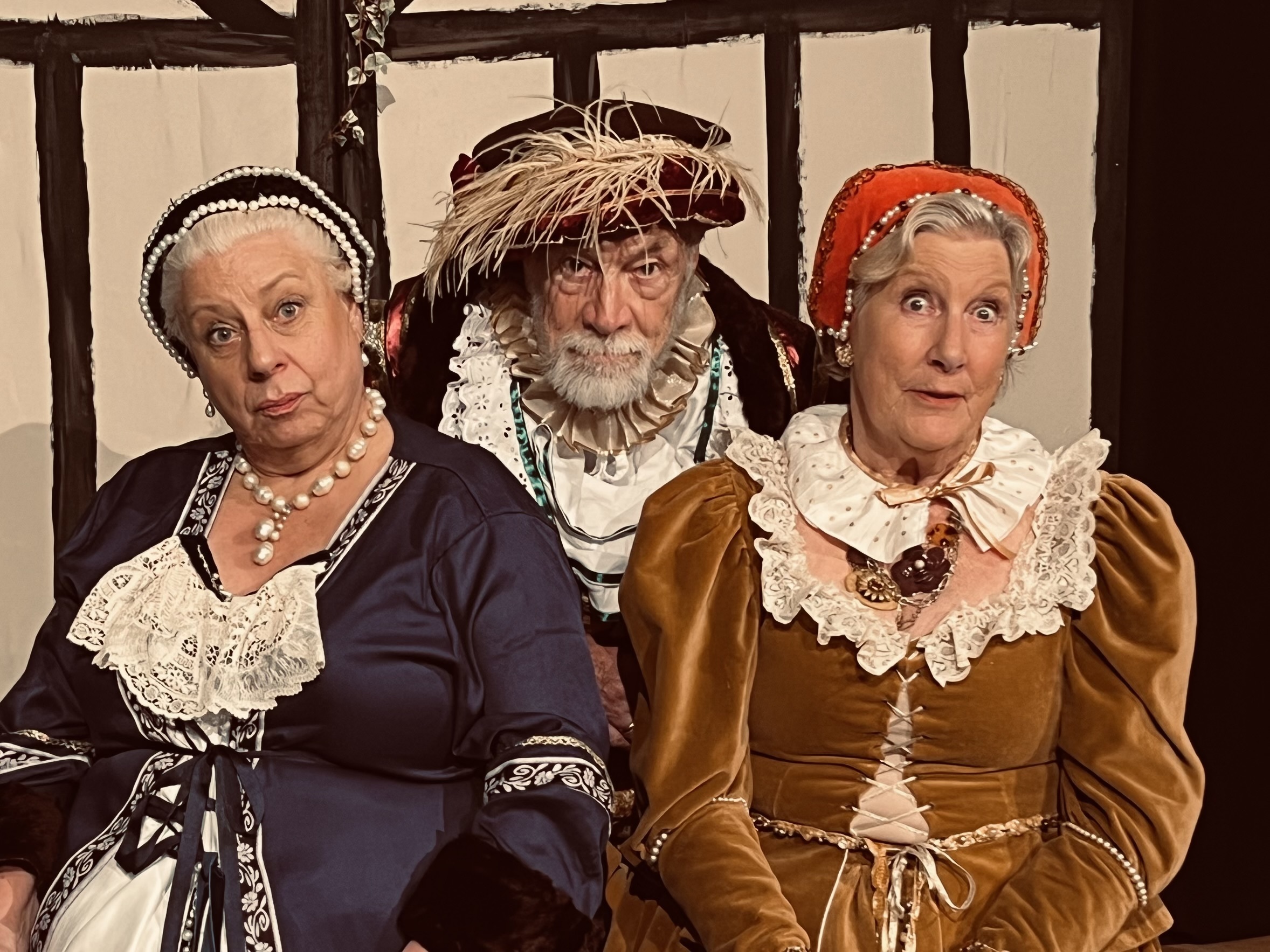
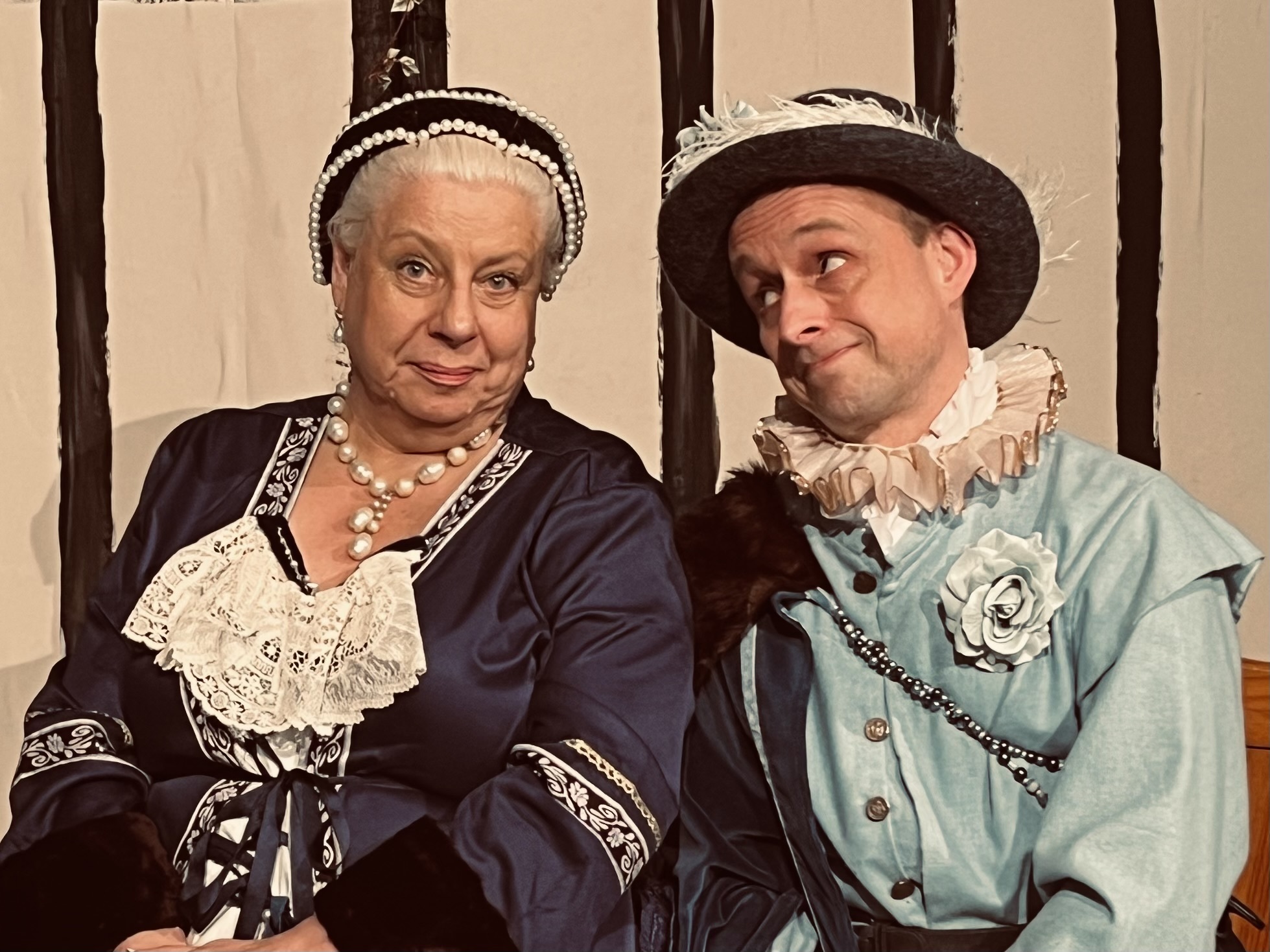
If you have not already seen them do take a look at the portraits in the ‘Merry Wives of Windsor Gallery’ here on the website. Estuary Players as you have never seen them before! In case anyone is wondering, these characterful images were created through the magic of AI.
THE PARTIES RESPONSIBLE FOR THIS ENTERTAINMENT
Director…Ian Potts assisted by Clare Philbrock
Script Adaptation… Ray Virr
Stage, Properties and Costume Management… Janine Warre assisted by Betty Donaldson
Lighting Design… Tim Pratt Lighting and Sound Operator… Ian Potts
Publicity, Website, Facebook and Programme… Clare Philbrock and Alan Caig
Poster Design… Clare Philbrock and Alix Kelman
Publicity material…Kelman Media
Box Office and Front of House Management…Howard and Chris Eilbeck
GRATEFUL THANKS TO
Pat Peters for input with music selection
Actors of North Tawton for loan of costumes
Everyone who helped with the set construction
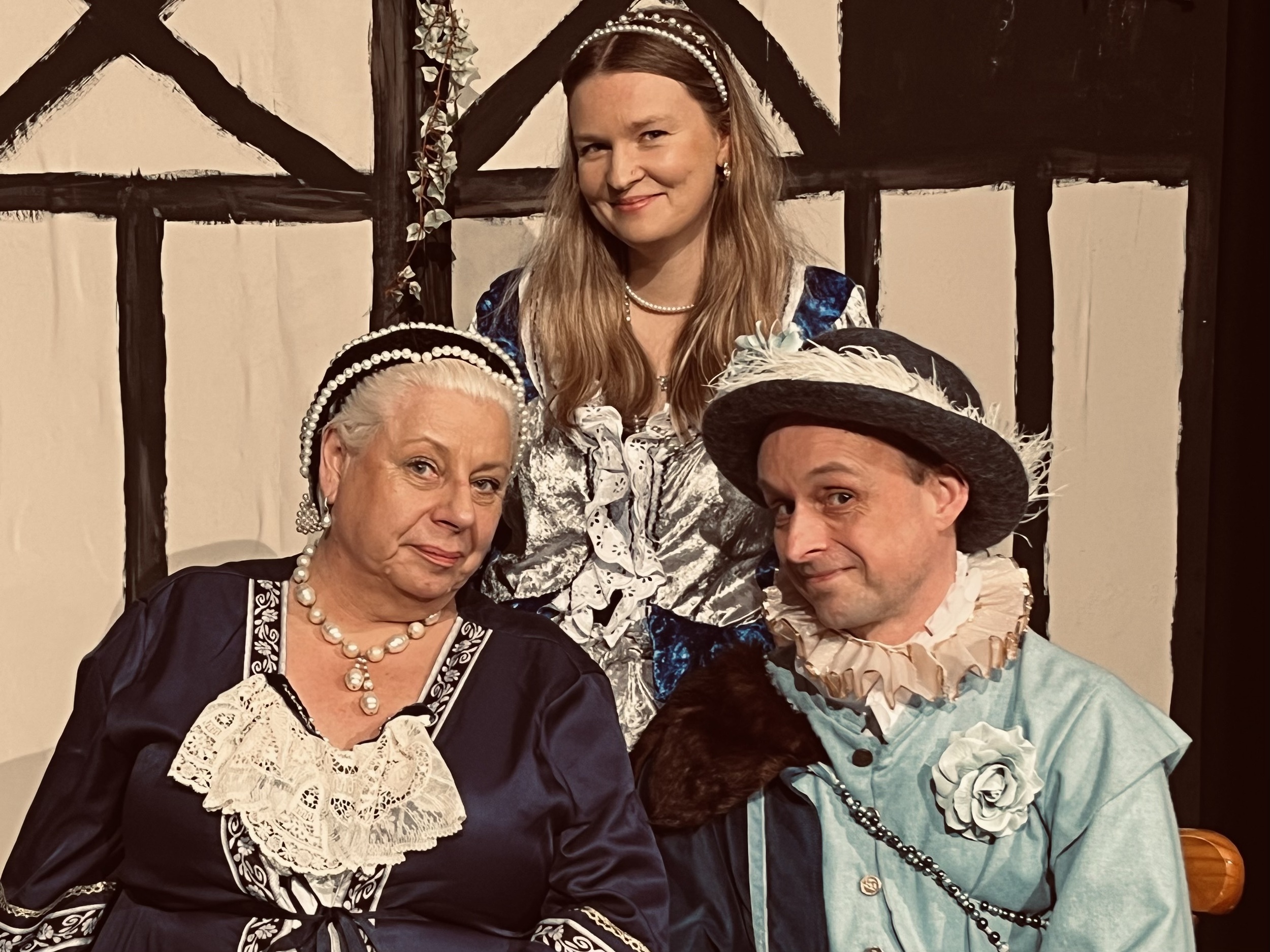
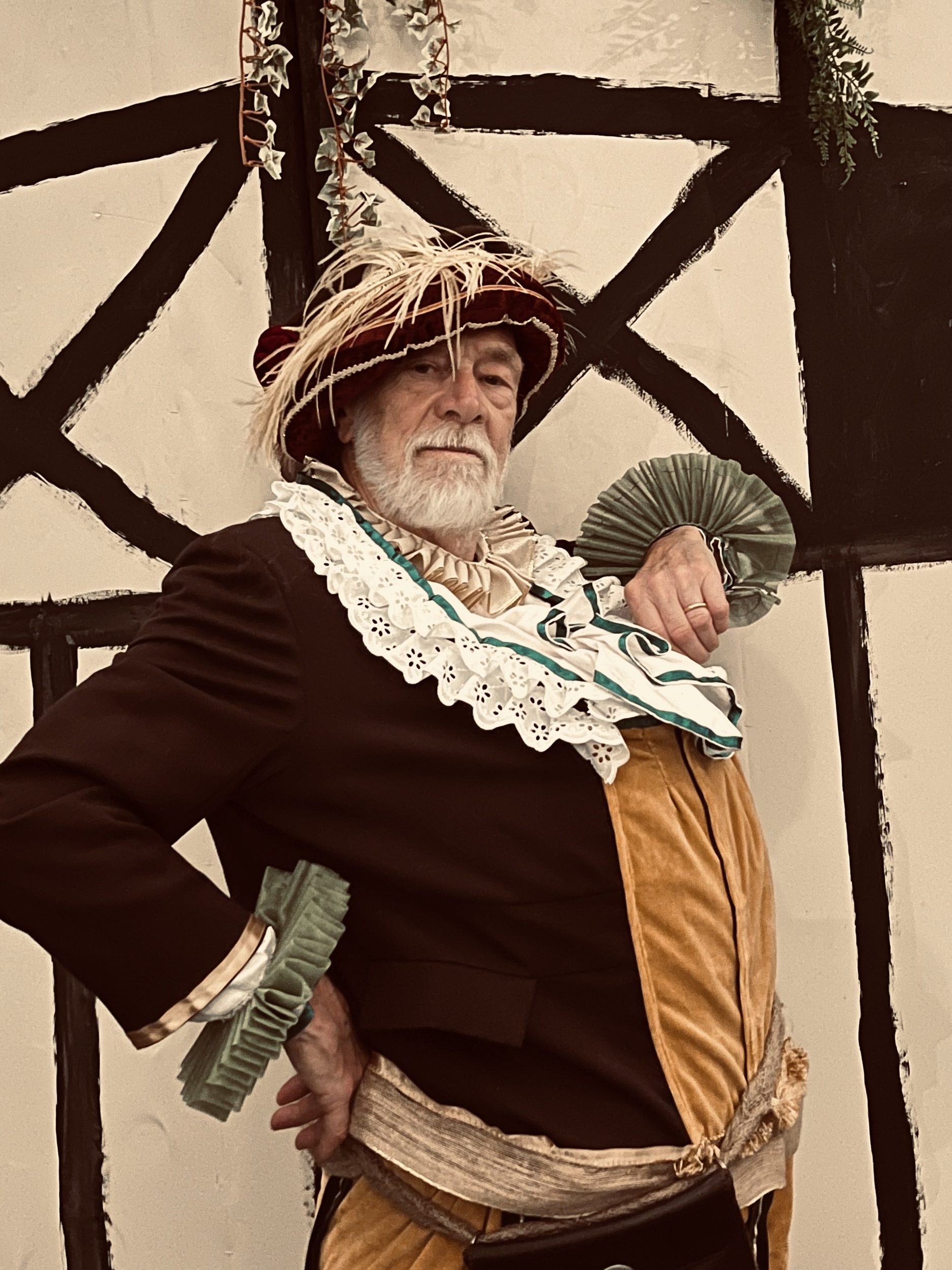
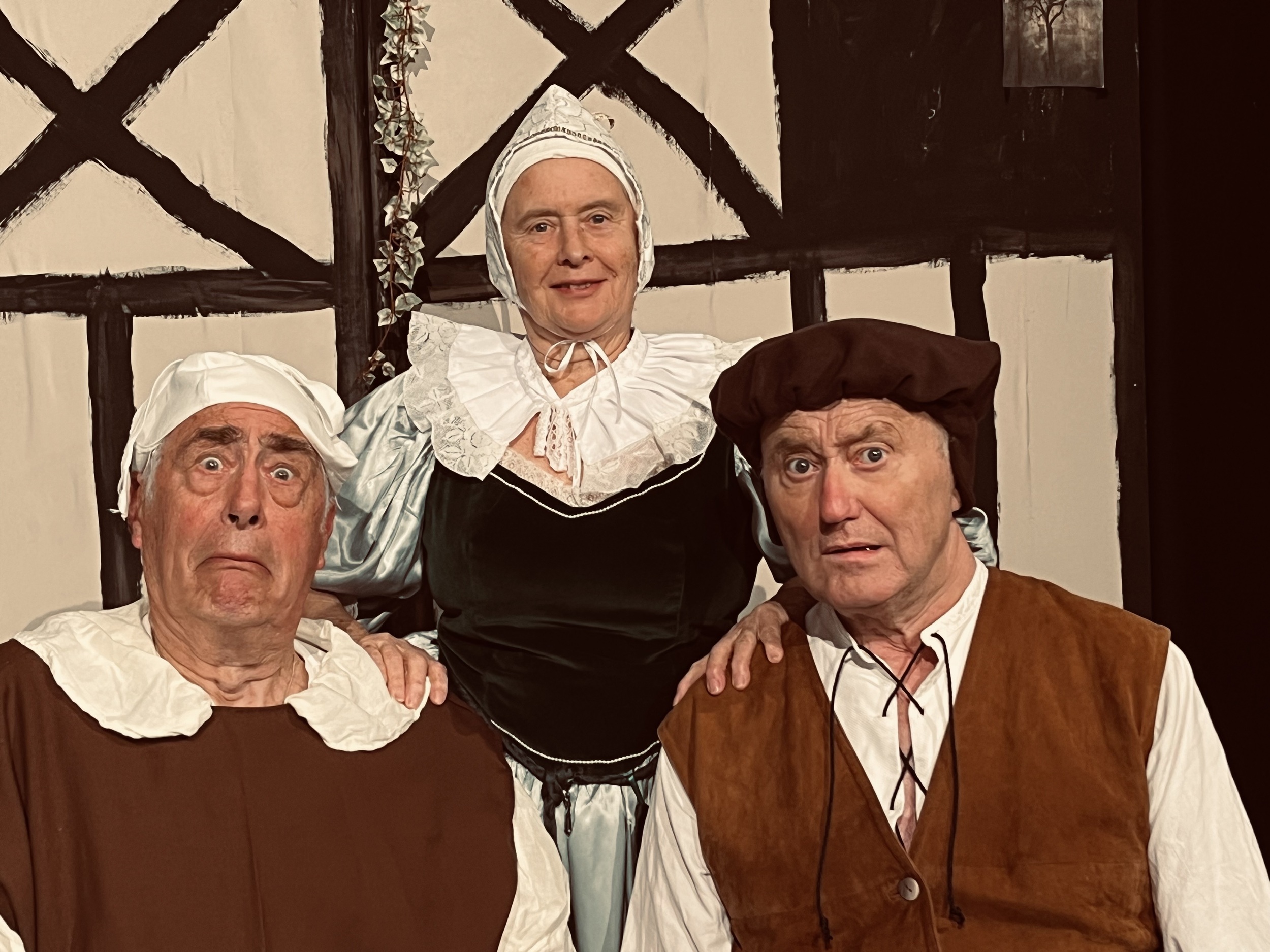
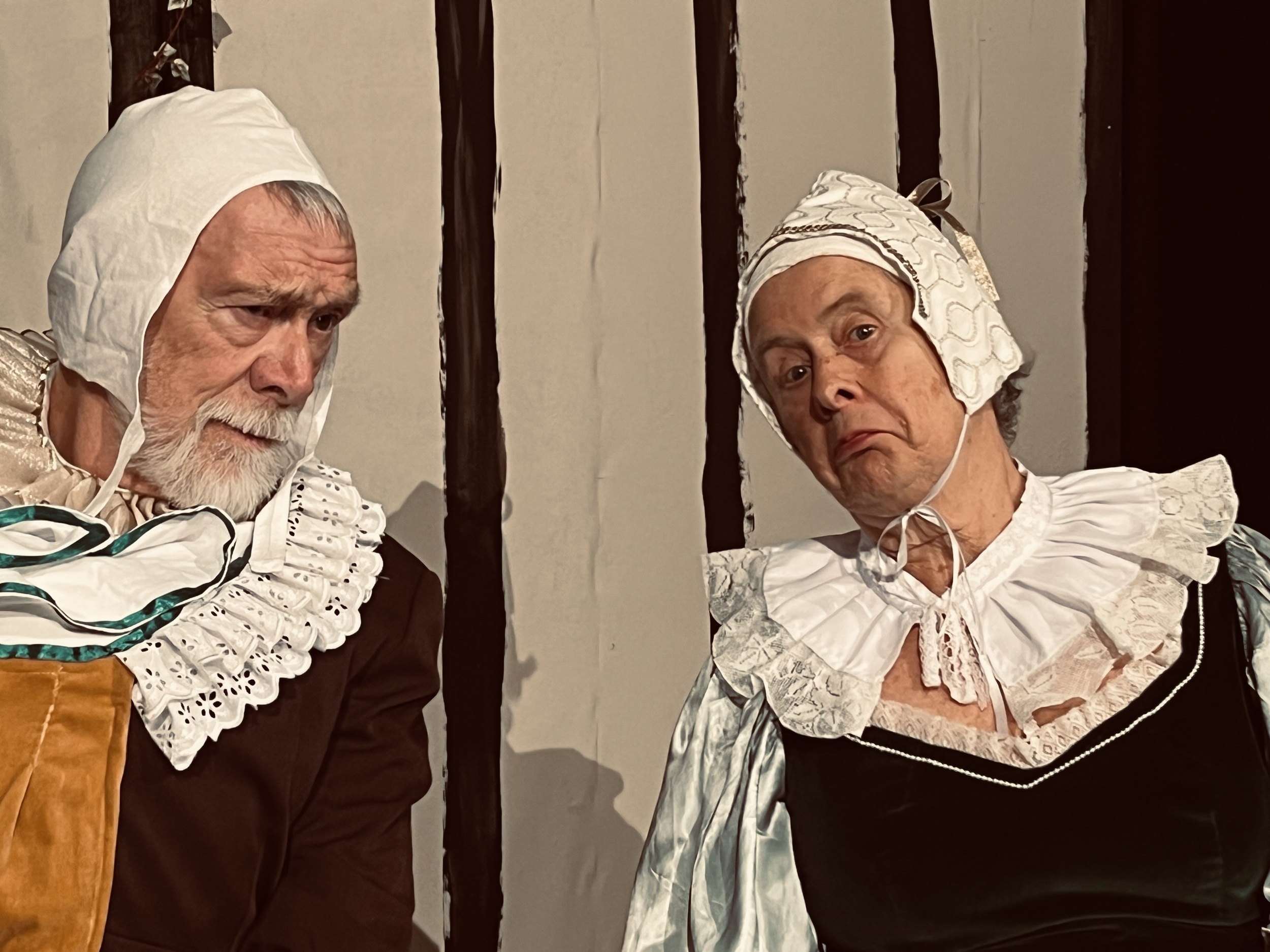
REVIEW
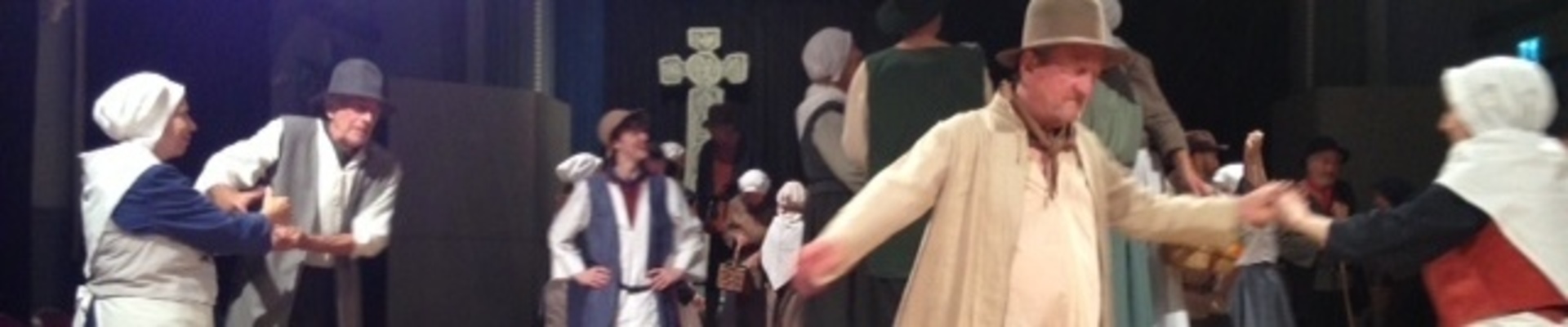
The play begins in the darkness of Matthew’s Hall. A Falstaffian greeting is given to us all - a clever play on both Shakespearean language and Falstaff’s conceited character. As rogues and rascals we are invited to enjoy the escapades of the middle class citizens of Windsor as they plot to make a fool out of the fat knight, Sir John Falstaff. As the lights came up on the stage the whole company enter from the back of the hall in bold Elizabethan song which leads to a simple, yet effective Elizabethan country dance. The audience is given time to take in the spectacle, admire the costumes of the period and to firmly establish the Elizabethan setting of the play.
The Merry Wives of Windsor is a bold choice of play for any amateur company. It is the most English of Shakespeare’s plays. Indeed it plays and toys with the English language. This is heightened in the gentle and good-hearted fun given to the Welsh accent of Sir Hugh Evans, cleverly exploited by Bob Drury, and the very Franglais accent of Dr. Caius, a difficult task which Chris Eilbeck pronounced with great confidence, especially the pun which ended the first half. In talking about the language and accents of the play, Ray Virr must be congratulated for his clever adaptation.
Merry Wives presents an opportunity for an enjoyable romp. Nothing seems better than bringing down the feelings of a pompous ass. Ian Potts production, assisted by Clare Philbrock, gently invited the audience to join in the fun. I especially enjoyed the taunting of Falstaff at Herne’s Oak in Windsor Forest. The oak itself was magnificently adorned, and the slight movements added to the spookiness of the occasion.
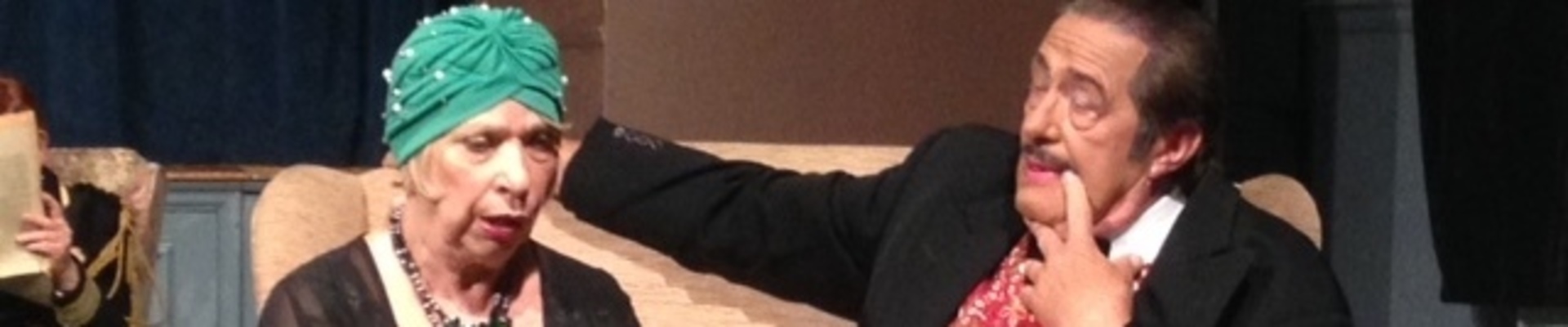
The success of Merry Wives depends greatly on the roles of the three leading women, who are the great plotters of Falstaff’s humiliation. Clare Philbrock as Mistress Meg Page and Pat Cowey as Mistress Alice Ford gave wonderfully warm confident performances. They allowed their full theatrical expertise to be shown especially when Falstaff was behind the arras, leading first to his hiding in the buck-basket and secondly to his disguise as the old woman of Brentford. Suzanne Dunstan, as Mistress Quickly, colluded craftily with everyone who could spare a coin, even with the audience, with whoM she built a good rapport. This play is notably original by being one of the first in the English language to celebrate characters drawn from the middle classes, and also to feature women as the prime movers of the comedy. The three leading women from this production certainly played strong hands in upholding this tradition.
The two husbands of our Merry Wives - Master George Page, played by Adrian Jackson, and Master Frank Ford, played by Andy Padmore - gave good performances as jealous husbands, possibly cuckolded. Andy Padmore’s disguise as Brook both supported the play on the English language and accents as well as adding to the drama and comedy of this ensemble production.
Apart from the big question in the play, “What shall be done about Falstaff?”, another hot topic, seen as the sub-plot, is “Who will marry Anne Page?” AnnE is the daughter of the wealthy local Page family, and was acted with flair and confidence by Abigail Coules- Milne. The three very different suitors are Abraham Slender, played by Will Kettell, Dr.Caius, played by Chris Eilbeck and the young dashing aristocrat Fenton played by Phil Hatchard. All three gave good credence to the sub plot, best seen at the ending of the play when Caius and Slender display great outrage at being tricked into believing they had married Anne, whereas Fenton, unfavoured by both parents, revelled in his success, as did we all.
Rumour has it that Shakespeare wrote Merry Wives at the request of Queen Elizabeth who, having seen Henry IV Part 1, wished to see a play about Falstaff in love. The play was indeed originally called “Sir John Falstaff and the Merry Wives of Windsor.” Alan Caig’s performance as Falstaff was excellent. He captured all the characteristics of this proud, arrogant and conceited knight in a bold extravagant performance. I marvel at how he managed to climb into the washing basket. He truly lit up the stage when he was on and gave full credence to the programme’s telling us that this is “ A Most Pleasant and Excellent Conceited Comedie.”
Many congratulations to all involved in this production, and especially for the invention and imagination of Ian Potts and his assistant director, Clare Philbrock. The performance grew on me as the play progressed. It is not a play I have seen very often. Indeed I recall only two occasions the last one being at Stratford in 2006. It was a thoroughly enjoyable evening. What better way to spend Shakespeare’s birthday!
Bill Pattinson
26.04.2026